8 Diet Tips To Prep For Performance
by Shannon Sterne, MS, MA, RDN
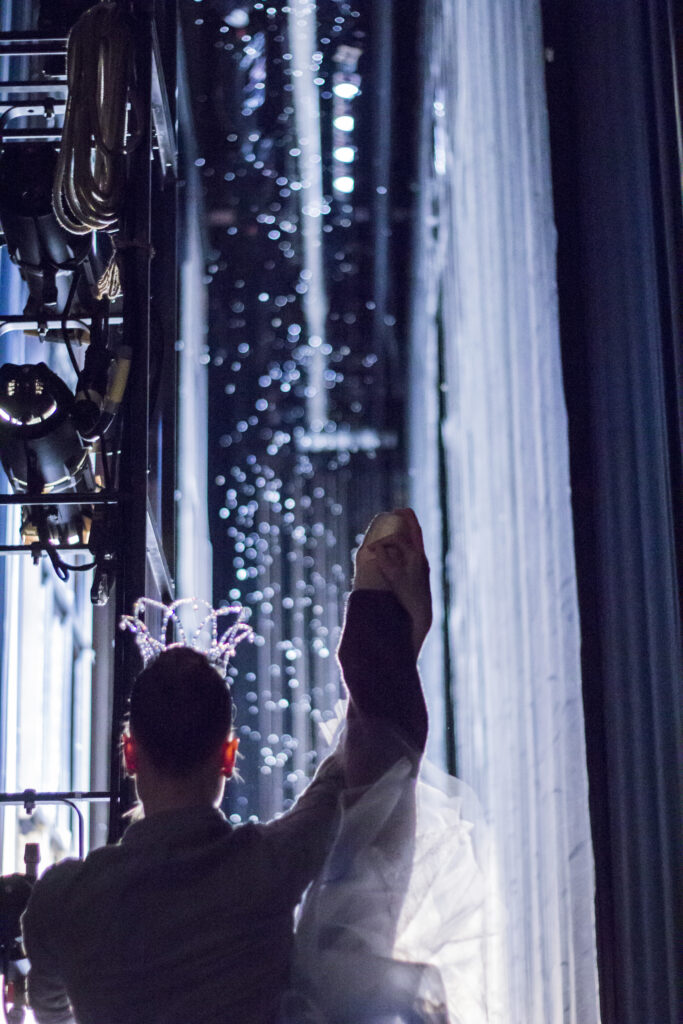
You have put in months of rehearsals, and now performance week is upon you. For many dancers, this translates to extra rehearsal hours with performance-quality run-thrus to build stamina, and long days at the theatre for spacing, lighting, and dress rehearsals. These physical demands can take their toll on the dancer’s body and may be coupled with feelings of anticipation, excitement or anxiety, which can affect sleep patterns, appetite, mood, and energy levels. If keeping your energy up during performance season proves challenging, try these eight tips to help prevent fatigue from taking center stage.
-
Stay hydrated. Even mild dehydration can impair dance performance, slow reaction times, and reduce concentration (ever blank out on stage?). As outside temperatures rise and humidity increases, the need to replace fluids becomes ever more important. And if you feel thirsty, you are already dehydrated. Aim to consume water regularly throughout the day to prevent thirst. If you dislike water, and have difficulty drinking enough throughout the day, try adding a cut lemon or lime to your water bottle.
- Go easy on the sports drinks. Sports drinks were originally designed to replace the carbohydrates and electrolytes during endurance events (like running a marathon) or long, strenuous activities like football or soccer. Numerous products are available in a variety of formulations for just about every type of activity, but for dancers watching their weight, sports drinks can add unwanted and unnecessary calories and sugars to the dancer’s daily intake. (Not to mention the artificial colors and flavors added to many sports drinks.) Water is sufficient for most dancers, but if you are a heavy sweater or if your classes and rehearsals keep you constantly moving and sweating for more than 3 consecutive hours, you might need a sports drink to provide fuel and to help replace electrolytes. Diluting a sports drink or 100% fruit juice with water (3 parts water to 1 part sports drink or juice) is another good strategy to make water more palatable without adding a lot of extra calories.
- Don’t diet. As the performance nears, some dancers develop anxiety about how they will look in their costumes, or whether their partner will complain that they are difficult to lift. This prompts some dancers to crash diet in the weeks prior to a performance. Dancers’ concerns about weight and body image are valid and can impact confidence, performance and well-being, but anxiety over weight and body image should be addressed earlier in the season. The weeks leading up to a performance are not the time to focus on weight loss. Instead, focus on providing your body with the fuel and nutrients you need to continue to perform at your best.
-
Fuel up. Most concert dance is anaerobic, meaning it consists of short periods of strenuous activity. To fuel anaerobic activities, the body relies on blood sugar and on stores of carbohydrates in the liver and the muscles. The primary cause of fatigue during performance is depletion of carbohydrates in the blood and the muscles. Ensure that your body has optimal stores of carbohydrates available for the performance by eating meals consisting of foods high in complex carbohydrates in the days leading up to your performances. Complex carbohydrates come from foods like pasta, whole grain breads and fruit, and are easily digested providing a steady supply of carbohydrates for your body to use. Avoid simple sugars like candy and soda pop, which will cause your blood sugar to spike and then crash leaving you feeling wiped out.
- Continue fueling on performance day. Stress, anxiety and anticipation on performance day may minimize appetite or even lead to gastrointestinal upset, but consuming carbohydrates in the hours leading up to the performance will help prevent the fatigue, shakiness, and lightheadedness associated with low blood sugar. To avoid feeling full and weighed-down, eat mini-meals 4 hours, 2 hours and 30 minutes before the performance. Meals should diminish in size as you get closer to curtain time and should consist primarily of complex carbohydrates. Avoid fried or fatty foods during this time as these can greatly slow digestion time and increase gastrointestinal discomfort. If consuming solid foods proves difficult, try a liquid meal replacement or a smoothie. Liquids pass through the digestive tract faster than solid foods and also help keep you hydrated.
- Stick with what you know. Avoid trying exotic cuisines or new food products or supplement formulations during performance week. It’s better to stick with the foods you know your body can handle. If you want to experiment with a new eating plan or supplements, test them out during rehearsals in the weeks prior to the performance, so you know how your body will react.
- Lay off the gas. Feeling gassy and bloated is uncomfortable under any circumstances, but trying to contract or jeté when suffering from excessive gas can be excruciatingly painful and even embarrassing. Beans are notorious for causing gas, and certain vegetables, including cabbage, cucumber and cauliflower can also contribute to gas in some people. If you are not accustomed to eating high fiber foods, such as dried fruits and brown rice, these foods can also be problematic. But reactions to these foods are highly variable between individuals. Be sure to limit gas-forming foods during the 24 hours leading up to your performance. Remember to eat slowly; the faster you eat the more likely you are to swallow air can cause gas and belching. Carbonated beverages and drinking through a straw will also increase the amount of air that is trapped in your digestive system.
- Rest and recuperate. Your body does most of its healing at night while you are sleeping, so make sure you are getting plenty of sleep before each performance. Both carbohydrates and proteins are needed to ensure healing of the muscle tissue and replacement of carbohydrates in the muscles. Muscles will take in nutrients best during the first 30 minutes after your finish dancing. Aim to consume a meal within this 30-minute window to help your muscles recover for the next performance. Avoid caffeine during the 6 hours before bedtime to promote more restful sleep.
BIO: Shannon Sterne is a dancer, choreographer, educator and wellness consultant. She performed with the San Diego Ballet and trained with three generations of principal dancers from the Martha Graham Dance Company before earning Masters degrees in Nutrition and Contemporary Dance from Case Western Reserve University where she teaches ballet and modern dance technique, dance kinesiology, and dance history. Shannon is a Registered Dietitian Nutritionist and the founder of Step Wise Wellness Consulting, which specializes in nutrition and wellness consultation for dancers.
CD Review: Weightless, Music for Contemporary Dance
Weightless is a collection of percussion and synthesized music for modern and contemporary dance class. The fifteen tracks on this CD range from 4:23 to 5:14 in length and 55-190 beats per minute. The first half of the disc’s tracks are all in 4/4 time. The mysterious and driving “Nautilus;” cool, weighty “Daydreamer;” and peppy “Sweet and Sour are a few of my favorites. The second half of the CD throws out some surprises: the chaotic “Underworld” in 7/8 time and “Breathe” in 5/4. Weightless blends the sounds and rhythms from a variety of world music styles from Latin to African to Eastern, all wrapped up in one sleek, dynamic package.
Weightless, Music for Contemporary Dance, Sam Bell and Dan Brown
Student Spotlight: Lucy Panou
Today we have a different type of student spotlight–a dancer who has crossed over into another area of dance…meet Lucy Panou…
1. Can you tell readers how you became involved with dance?
I started dancing quite a bit later in comparison to the rest of my peers, at the age of 12. My interest began in school PE classes when dance was being introduced as an alternative method of fitness and I took to it straight away. I was confident with it, had dexterity and co-ordination, it came naturally so to speak. I then joined an after school dance club and the rest is history. From there I joined a contemporary youth dance company led by one of the founders of UK dance company Phoenix Dance Theatre, Donald Edwards, and worked my way up to vocational training at Middlesex University.
2. What do you find you like best about dance class?
Dance and the act of dancing itself allow me to express myself. I find that whatever the emotive background of a specific movement, phrase or piece, I am still able to find my own personal and emotional connection. Finding this connection became very prominent whilst training for 3 years. I was able to relate to what I was doing on a much more complex level and had justification for each and every detail.
However, having shifted my focus from physically dancing to the academic side of Dance Science at Trinity Laban, my interests in dance have taken an 180 degree turn and have progressed to another area of the art form. Academic study at Trinity Laban has allowed me to truly discover what I am passionate about. I enjoy having access to the knowledge and the means to pushing physical boundaries in dancers. I truly believe that dancers should be classed as athletes as well as artists. An area of particular interest to me is how periodization and varying training protocols can improve the performance and physicality of professional dancers.
3. What is the hardest part about dance for you?
Having experienced it briefly at vocational level as well as being constantly exposed to it at Masters level, I am very confident in saying that the lack of knowledge about how the human body works is the hardest and least enjoyable part of the profession for me. This lack of knowledge, in my opinion, is inhibiting optimal performance in dancers. Over and over, studies have found that dancers are unfit in comparison to other athletes, and that they can be associated with malnourishment, eating disorders and high injury rates, as well as psychological-based issues such as low self-efficacy that can be linked to the lack of psychological training methods (Twitchett et al, 2010; Wyon et al, 2007; Nordin-Bates et al, 2011). The above may sound stereotypical and while it cannot be generalised for the entire dance population, the research suggests that it is very common. This is where my generation of dance scientists and physiologists comes in – bringing to light such problems and working closely with the dance community to provide a backbone of support.
4. What advice would you give to other dancers?
0Lessons In Creativity – Outside The Dance Studio
Another full-time season is over for my company, and another semester has come to an end for the school. Cue the identity crisis! What on earth am I supposed to do with all this unstructured time? How will I prove my worth to myself if I can’t dance every day?
Ordinarily, these thoughts and worse would be running through my head this time of year. Somehow, it’s different now. I have always envied and admired dancers who could maintain a strong (or at least extant) sense of identity through layoffs. Am I finally becoming one? This installment of Finding Balance is a celebration of summer’s not-guilty-anymore pleasures: rest, leisure, creativity, and study. All are enjoyable, all well-deserved, and all are outpourings of myself. Each creative or restorative undertaking teaches me something I can take into the studio. Each makes my dancing more valuable for those lessons.
One of my greatest creative loves outside the dance studio is drawing. Chance brought me to a facilitated figure drawing session in the spring of 2010, and I’ve attended with relative regularity ever since. My rehearsal and teaching schedule this season finally allowed me to get there weekly (or more, if I was lucky) and seeing consistency pay off has been truly rewarding.
Honing another craft to a level I can take pride in is a gift to myself. Facing a blank piece of paper, planning a composition (or not), capturing the gesture of a pose, examining the geometry and architecture of the human form…all these things are so similar to dance, just translated from three dimensions to two. Sensitive consideration of the tools (the dancer, music or dance style on one hand, the pencil, charcoal, model, and paper on the other) makes for a better artistic product and a more enjoyable process in any dimension.
Showing up to those early classes made me nervous! I was mostly learning on the fly, and overwhelmed much of the time. Being in the company of artists I admire and trust kept me coming back. Now, experience and practice have eased those initial fears. I really enjoy how much freedom there is to interpret what’s in front of me once the basics of proportion and tone are more or less in place. As a naturally cautious person, I find a devilish sort of delight in just slapping a bunch of soft charcoal down on the paper and finger-painting with it. Other times I better appreciate the delicate, faintly oily smokiness of graphite, laid down one gentle layer at a time.
Working loosely without a definite goal in mind is not something I’m usually comfortable with. The progress I’ve made under those conditions offers a few lessons to me:
- Progress is directly related to consistent practice. Showing up ready to work opens the door to improvement.
- Judging my technique against something concrete (Does is look like the model? Is it at least believable as the likeness of a human being?) is kinder than judging it against a vague set of ideals. (Is this great? Is this skillful? Is this perfect?)
- In a class with no peers, I am free to judge my progress against myself alone. My work will never look like anyone else’s, and shouldn’t. That knowledge makes me both more confident in and more accountable for my own success.
- Analyzing my work, or asking others to analyze it, gives me valuable information about how to use technique. Observing what feelings drawings inspire and why is so much easier with a little perspective.
What I love most about the class is that everyone shows up because we want to create something that day. We arrive needing to express. We get together enough money to pay the model and a little bit of rent, and we make art. It’s such a clear, simple philosophy of creativity. It creates a working atmosphere that’s open, positive, respectful, and vibrant. It reminds me that such a mentality is essential for every art form, and it’s what I try to bring into the ballet studio each morning.
When I pack up my art bag at 9:15 every Thursday night, I take a lot with me. Pride in my new skills, feedback to contemplate, techniques to try, and a generous mottling of charcoal smudges from face to fingers. I treasure all of it.
Readers, what other expressive outlets do you use to enrich and inform your dancing? Please share them in the comments section!
Assistant Editor Emily Kate Long began her dance education in South Bend, Indiana, with Kimmary Williams and Jacob Rice, and graduated in 2007 from Pittsburgh Ballet Theatre School’s Schenley Program. She has spent summers studying at Ballet Chicago, Pittsburgh Youth Ballet, Pittsburgh Ballet Theatre School, Miami City Ballet, and Saratoga Summer Dance Intensive/Vail Valley Dance Intensive, where she served as Program Assistant. Ms Long attended Milwaukee Ballet School’s Summer Intensive on scholarship before being invited to join Milwaukee Ballet II in 2007.
Ms Long has been a member of Ballet Quad Cities since 2009. She has danced featured roles in Deanna Carter’s Ash to Glass and Dracula, participated in the company’s 2010 tour to New York City, and most recently performed principal roles in Courtney Lyon’s Sleeping Beauty, The Nutcracker, and Cinderella. She is also on the faculty of Ballet Quad Cities School of Dance, where she teaches ballet, pointe, and repertoire classes.
0The DREAM Celebration
by Ashley David

Michaela DePrince; Photo by XMB Photography
As a native of Maryland and a dancer since the age of three, I am certainly not a newbie when it comes to going to seeing dance performances in the area—especially Washington D.C. However, D.C. is not always the first city to be regarded as a hub for dance in the U.S. While I beg to differ, I can see how high profile cities such as New York or Los Angeles steal the dancing spotlight. With that said, one performance in early May changed mine, and I’m sure many other D.C. dance viewers’ opinions on what D.C. can bring to the table for the dancing world.
This incredible show was The DREAM Celebration, held in the Historic Lincoln Theatre on Saturday, May 4 and Sunday, May 5, 2013. Presented by CityDance, the DC Commission on the Arts and Humanities, and co-produced by Rasta Thomas, the program delivered sought after, high quality professional talents from around the nation. Above all, the show was a benefit for CityDance’s DREAM program, which provides free after-school programming to hundreds of D.C. elementary school students. A 2013 Finalist for the President’s Committee on the Arts and Humanities National Arts and Humanities Youth Program Award, the CityDance DREAM program has been established for eight years and is expanding to the critical middle and high school years to provide more serious training and performance opportunities for students interested in continuing their dance education. CityDance even took the DREAM students on a field trip to see the Saturday night show and invited them on stage to perform as the finale.
Their performance came after such artists and companies as Rasta Thomas (Bad Boys of Dance), tap sensation Dorrance Dance (2013 Jacob’s Pillow Dance Award Winner), Clifton Brown (Lar Lubovitch) and Michaela DePrince (Dance Theatre of Harlem). The list most certainly does not end there as the Lombard Twins, Cartier Williams and Adrienne Canterna all performed, as well as dancers from American Ballet Theatre, Lar Lubovitch, the Orlando Ballet, Washington Ballet, North Carolina Dance Theatre, KGP and Ballet X. In addition, CityDance again incorporated its own students into the show through two performances from CityDance Conservatory students. The first, Youth America Grand Prix 2012 Philadelphia Semi-Finals Junior Grand Prix Winner, Larisa Nugent, wowed the audience with Aurora Variation from Sleeping Beauty. Next, CityDance Conservatory Students turned up the energy with Carnaval, choreographed by emerging D.C. artist and CityDance Faculty, Robert J. Priore (Company E).
In a recent Huffington Post article by Caroline Gerdes, CityDance Executive Director Alexe Nowakowski hits the nail on the head when she states, “I don’t know of any other events in recent history where we had this many dance artists of this caliber in Washington, D.C. this accessible and affordable.” While I did of course feel blown away by the DREAM Celebration, my favorite moments were when non-dance audience members expressed the same sentiments. The lobby was abuzz after the show with many people in awe of the talented dancers and performers and as far as I could hear, not a bad comment was said.
Bravo to CityDance for conceptualizing this performance as well as to the D.C. Commission on the Arts and Humanities and Rasta Thomas for their support. If you are in the D.C. area anytime this year, look out for an anticipated 2013-2014 performance season through a partnership between CityDance OnStage and Washington Performing Arts Society. Companies such as Dance Theatre of Harlem, Koresh Dance Company and Momix are scheduled to perform!
0