by Ashley Ellis
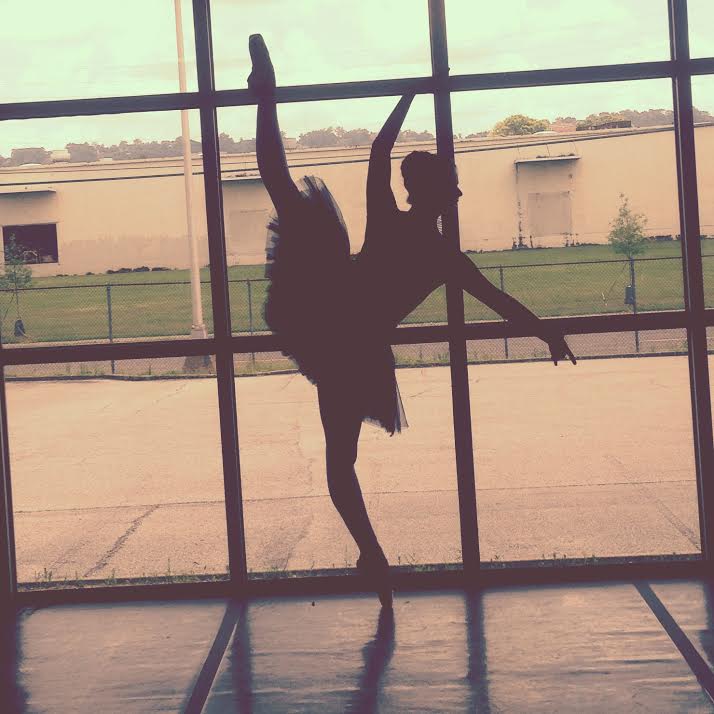
You may have heard of dancers referring to their body as their instrument. It is so true, and we must constantly take care of our instrument so that we are able to ‘play our music’ to the best of our ability.
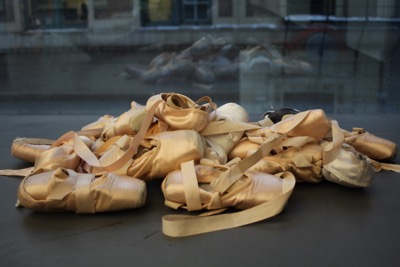
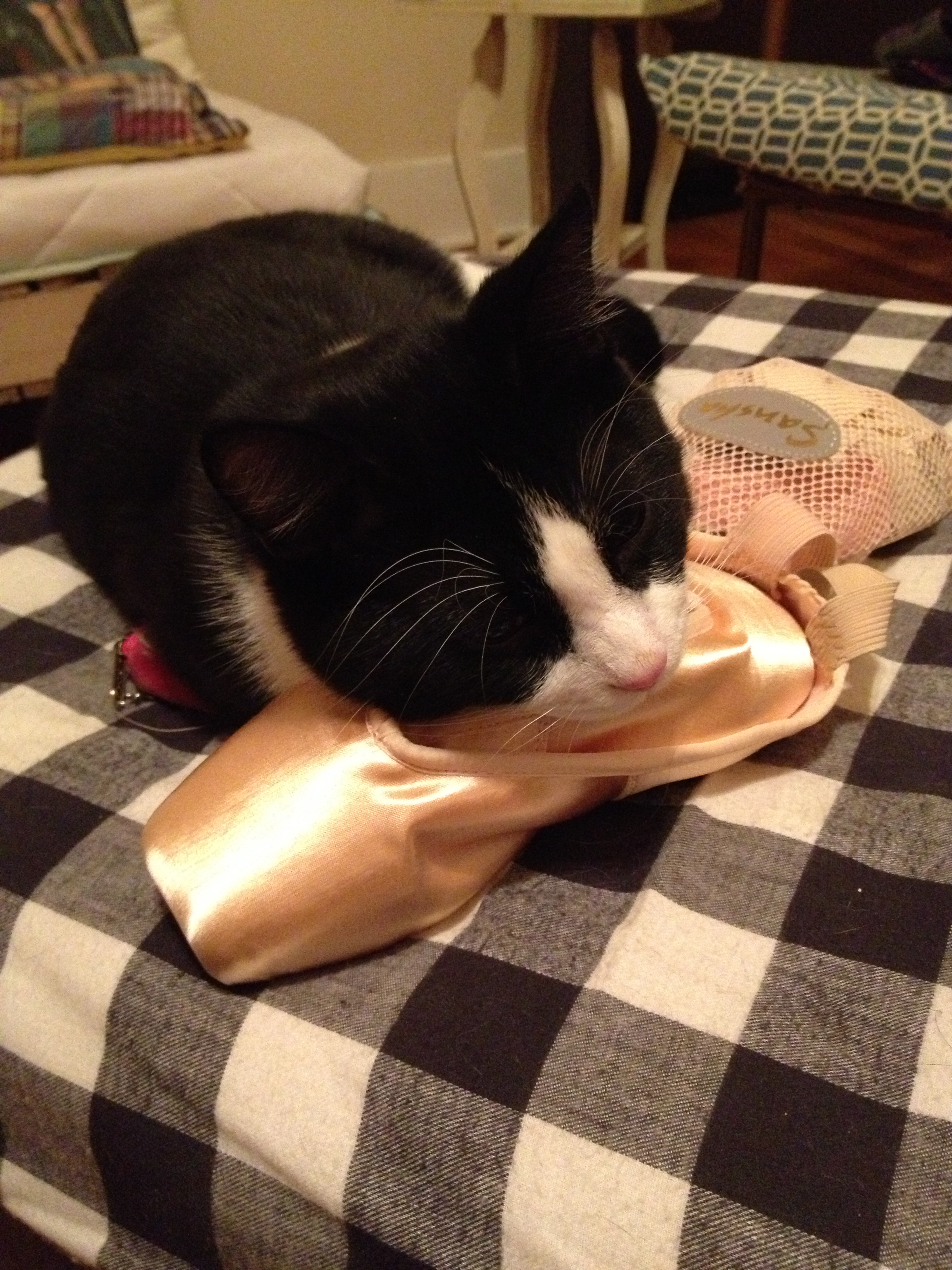
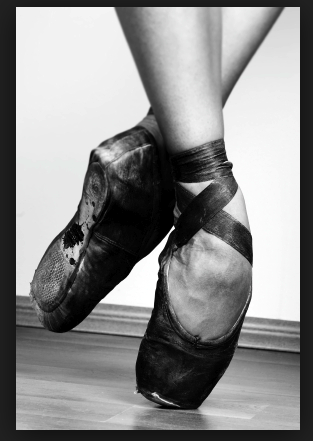
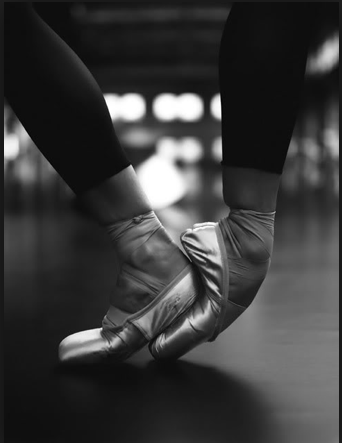
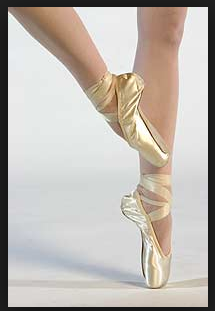
With this said, for a ballerina there is a whole other very important factor that comes into play. Pointe Shoes. Keeping with the same analogy, I’d say that pointe shoes are like the bow to our violin. They go together to create the ‘music’ of a ballet dancer. How she feels in her shoes can greatly affect her dancing experience.
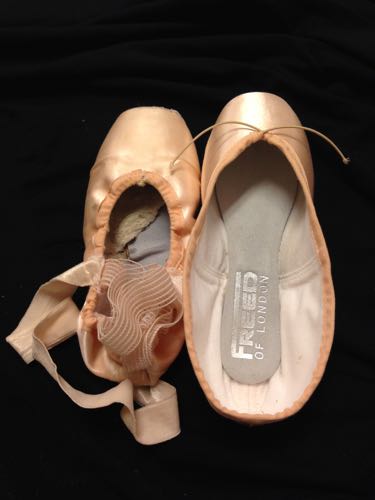
There are a number of pointe shoe brands out there, and a dancer will usually try many different makes and models before settling on one. My very first pair of pointe shoes were Contempora by Capezio (they were pink and very small, hehe). After that I spent a few years in pointe shoes made by Sansha before settling on FREED Studios Professional, which is what I wear to this day.
I will admit though, that I am currently testing out the waters with a new pointe shoe, FREED Classic. They aren’t far from what I am using now but as any ballerina can tell you, once you find your shoe it can be a real challenge to switch brands. The reason for this is that after spending so much time in your chosen pointe shoes they become a part of your foot so to speak; you learn how to articulate and “use” your feet in these shoes.
The biggest difference between what I have been wearing, the ‘studios’, and the new (to me) ‘classics’ is that the studios are what we call a stock shoe and the classics are handmade. The truth is that I could go on and on about the differences between the two, but well, for your sake I won’t bore you with ALL of the details!
Because the FREED classics are handmade they can be custom ordered for the personal needs of individual dancers. This means that they will not only fit better by shaping them around a dancer’s foot, but can also accentuate strengths and give more support or pliability where it’s needed. In fact, the alterations that can be made to these shoes are seemingly endless–it’s really quite remarkable.
Despite all of the wonderful aspects of having a shoe made just for you, it takes time to get it just right, and when it comes down to it you must feel at home in them. As for me, I am still at home in my stock shoes.
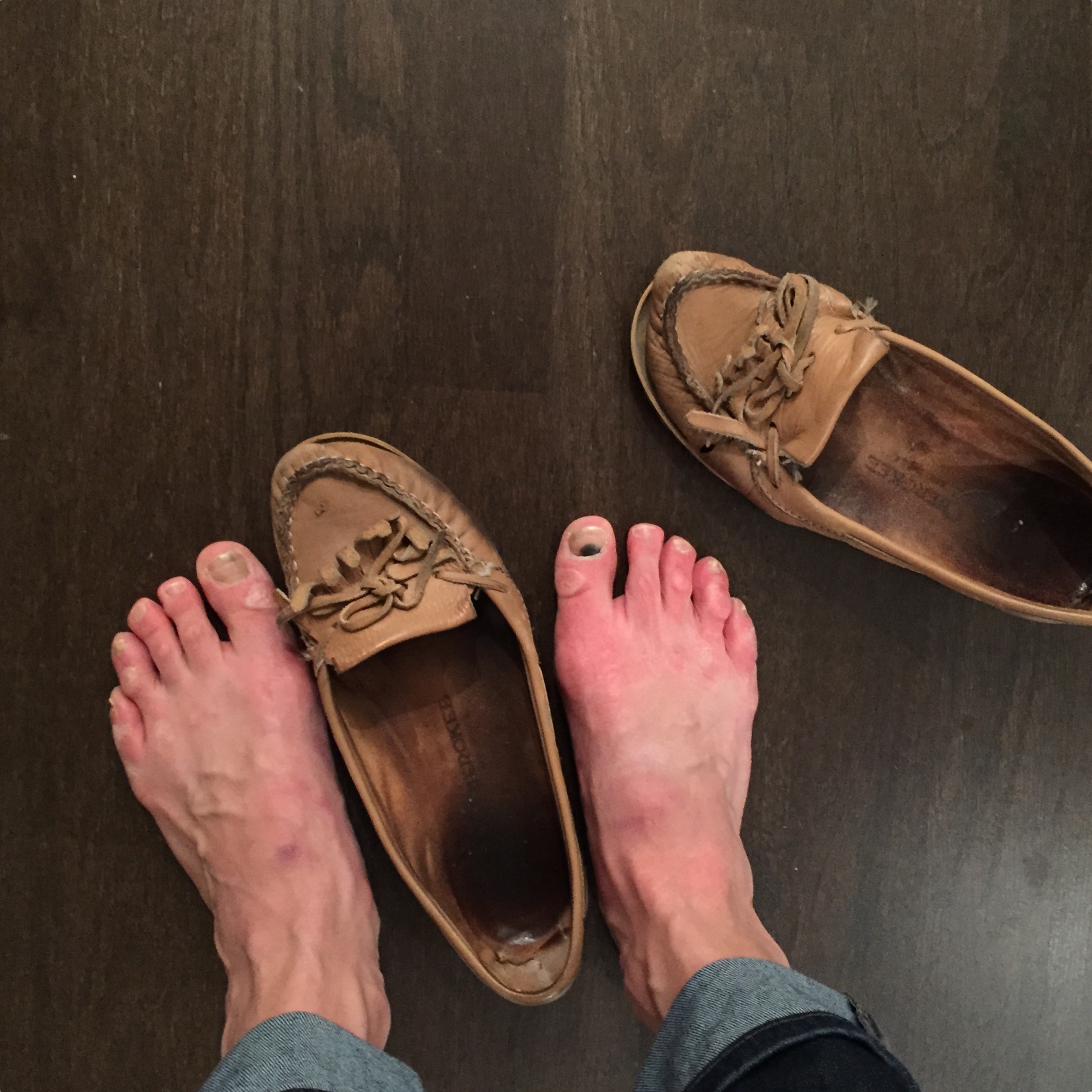
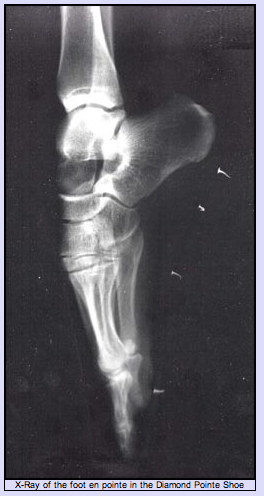
It seems that the general thought that comes to mind when thinking of pointe shoes is, “ouch!”. I don’t know how many people have asked me if the box is made of wood (no, not wood, just many layers of fabric and glue). It’s funny because once you reach a certain point in your professional career you wear them so many hours throughout each day that it really isn’t all that painful. Don’t get me wrong, it isn’t walking on clouds, but your feet become strong, and do toughen up over time.
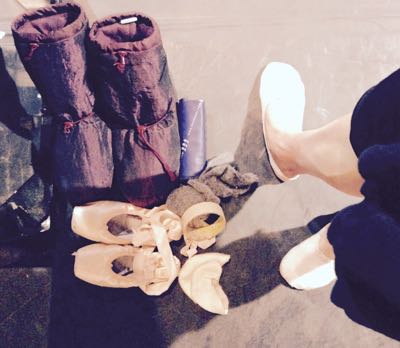
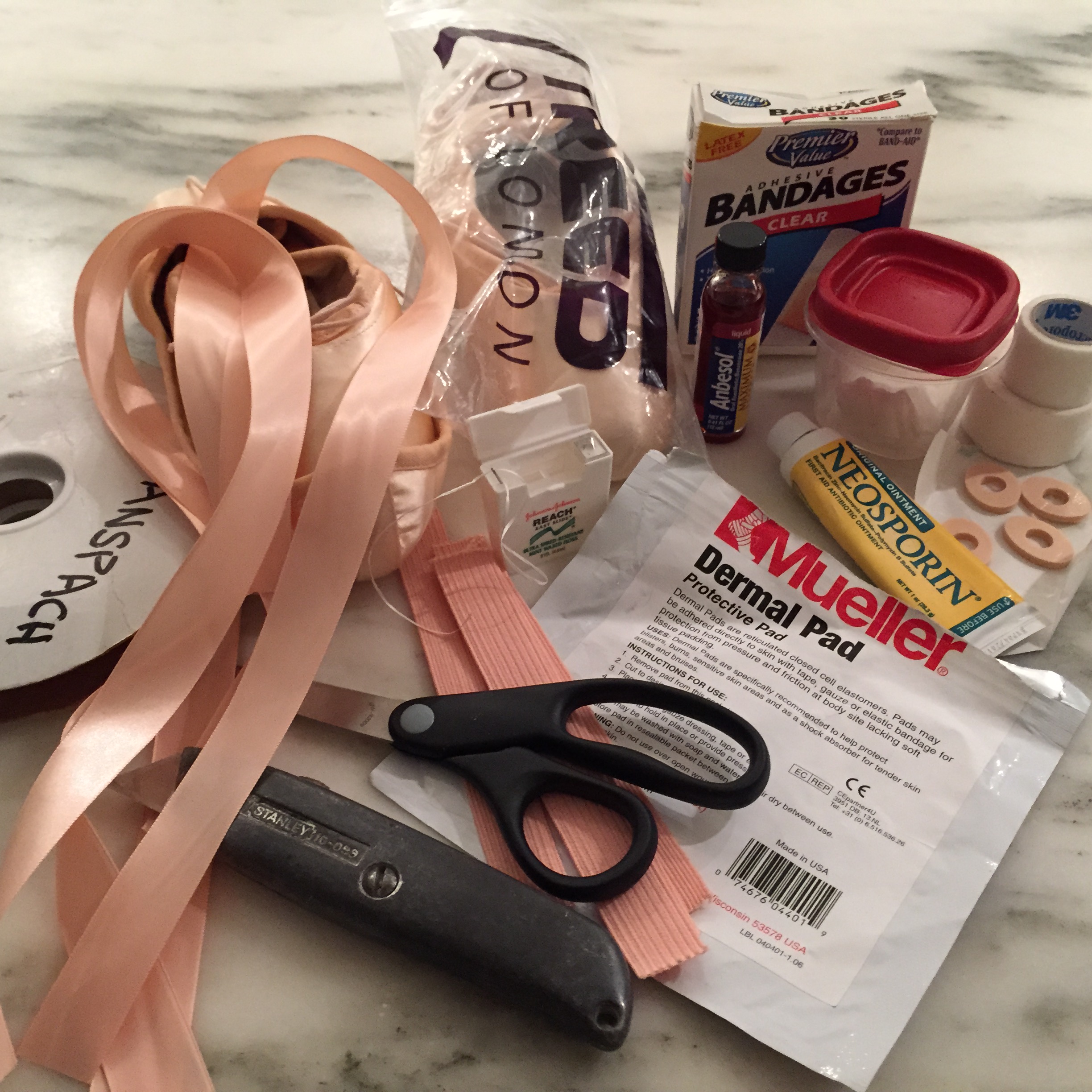
That said, most dancers will still create some sort of little barrier between the toes and the actual box of the shoe for protection, some of which include: various kinds of sports tape, masking tape, duct tape, toe pads made of foam, wool, rubber—even gel-filled ones. I wear a simple toe pad made from a thin layer of lamb’s wool. I actually didn’t wear anything in my shoes until about two years ago. My teacher didn’t let us when I started out on pointe so that we would really have to feel the floor and articulate our feet better.
One of the most important things to know is learning how to break-in your pointe shoes. They are not the kind of shoes that you can just slide on your foot and wear. If you do—well—they will feel like wood and cause much more pain than they should. This ritual is yet another aspect of wearing pointe shoes that is individual to each dancer.
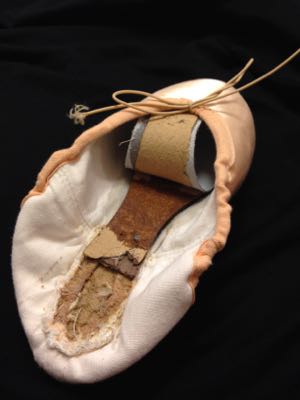
How I prepare my shoes:
- Cut the shank.
- Add glue to the middle of the shank where I need the most support.
- Sew the insole back down so it doesn’t roll up under my arch.
- Step on the box, then work it a bit to soften the upper box area.
- Wear them a bit to break them a little more and form them more to my feet.
- Bang them really hard on cement so they are quiet as well as easier to move in.
- Glue the inside upper portion of the box.
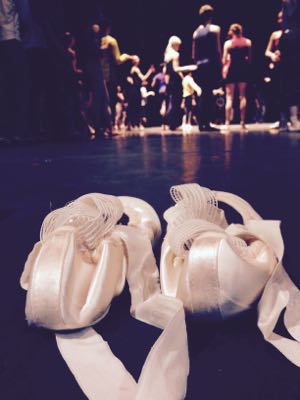
- Sew on elastic and ribbons.
Even though there are those days when I get to that 6th hour of rehearsal and my feet are simply swollen and ready to be soaked in a big bucket of ICE, I do truly love dancing on pointe; with the movement qualities that it allows, and illusions that it can create.
Boston Ballet presents Lady of the Camellias, running from February 26th through March 8th. Tickets are available here. See Ashley perform the lead role of Marguerite at the Saturday matinee.
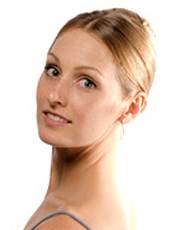
Contributing writer Ashley Ellis is a principal dancer at Boston Ballet. Ellis hails from Torrance, California and she received her dance training at the South Bay Ballet under the direction of Diane Lauridsen. Other instruction included Alicia Head, Mario Nugara, Charles Maple, and Kimberly Olmos.
She began her professional career with American Ballet Theatre’s Studio Company and later joined American Ballet Theatre as a company dancer. In 1999, Ellis won the first prize at the Los Angeles Music Center Spotlight Award, and went on to become the recipient of the Coca Cola scholarship award in 2000 and 2001. She has performed in Spain with Angel Corella’s touring group and joined Corella Ballet in 2008 as a soloist. In 2011, Ellis joined Boston Ballet as a second soloist. She was promoted to soloist in 2012 and principal dancer in 2013.
Her repertoire includes Marius Petipa’s The Sleeping Beauty; Mikko Nissinen’s The Nutcracker; Natalia Makarova’s La Bayadère; Marius Petipa’s Swan Lake; Christopher Wheeldon’s DGV: Danse à Grande Vitesse, VIII and Polyphonia; Harald Lander’s Études; Michel Fokine’s Les Sylphides; Rudolf Nureyev’s Don Quixote; Christopher Bruce’s Rooster; George Balanchine’s Serenade, Coppélia, Symphony in Three Movements, Symphony in C, and Tchaikovsky Pas de Deux; Clark Tippet’s Bruch Violin Concerto; Twyla Tharp’s In the Upper Room; Stanton Welch’s Clear; Angel Corella’s String Sextet; Wayne McGregor’s Chroma; Jorma Elo’s Awake Only; Jerome Robbins’ Fancy Free; Jiří Kylián’s Wings of Wax, Symphony of Psalms, and Petite Mort.