4teachers
Review: Every Step You Take by Jock Soto
by Catherine L. Tully
I’m fascinated by the lives of dancers. Even though I was one, I can never seem to get past t
he fact that each of us has such a distinctly different path–and a totally unique perspective on what it is like to live this life.
Because of that, I was excited to read Every Step You Take, a memoir written by Jock Soto (with Leslie Marshall). After all, this is a man that I grew up watching in the ballet world. Soto was a principal dancer with NYCB when he retired at the age of 40, and this book begins with the end of his career on stage. A peek inside the thoughts and fears that swirl around one’s head when the final performance looms, I thought it was a great opener.
Where, I thought, will this book go from here?
Review: Variations by Lisa Harris
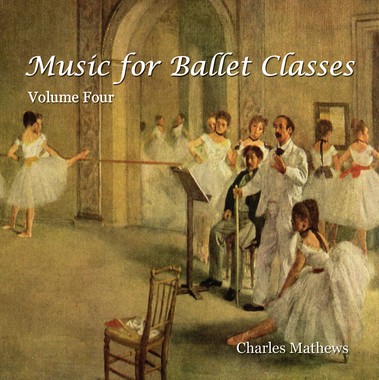
This is a CD by the well-known ballet pianist, Lisa Harris. Variations features some unique tracks, adapted for piano, including:
Seasons/Elton John
History of Us/Indigo Girls
Save the Best for Last/Waldmen
‘Til There Was You/Willson
The Rose/Midler
Piano Man/Joel
And many others, including classical composers, Tchiakovsky and Delibes. Played expertly by Harris, there are tracks for both barre (19) and centre (20). If you are looking for a ballet class music CD with lots of variety, this is it.
The music here can be used for classes at all levels. I’m sure adults would appreciate the selections, but the music would work for any age group. If you haven’t heard Ms. Harris play before, know that she has plenty of experience–and many other CDs to choose from, as well as digital downloads available. Look for more reviews of her music on 4dancers soon.
Visit her site for more information and for samples of the music.
Review: Ballet Studio Inspirations, Volume Two
Yet another lovely CD by Richard Maddock. By now, it should be no surprise.
Ballet Studio Inspirations, Volume Two is a terrific CD, appropriate for more advanced classes in my opinion. The music is stunning, but a more expert ear is required to find the music here–it is perfect for honing musicality as a dancer at a higher level—something I believe is very important. While not every track is challenging this way, I do think that younger, more inexperienced dancers may find some of the music difficult to follow.
The other reason I would recommend this CD for higher level classes is the fact that there are plenty of choices for the instructor. There are 45 original compositions for barre and centre here, with some designed specifically with pointe in mind–although they can be used for other exercises as well.
There are 12 tracks for the regular barre and six more for the pointe barre. The centre features music for port de bras, petit allegro, grand allegro and more. The pointe section of the centre has an additional eight tracks.
This CD would make a fine addition to any ballet teacher/studio’s collection. Hear samples and more at Maddock’s website–and if you need digital downloads, he offers those as well.
0To Choreograph or Not to Choreograph….That is Always My Question…..
by Lucy Vurusic Riner
Being a high school dance teacher I typically choreograph anywhere between three to five full length dances each year for my student companies. Back in the day, when I was super young and wet behind the ears I made dances about just about anything. I might really enjoy a song and that would be my jumping off point. Or I might have just gotten out of a bad relationship or had a family quarrel and that would be enough to conjure up a combination or two. I was never at a loss for some idea and I was never afraid to try just about anything. I followed the basic rule that most high school dances (and I guess commercial dances as well) were typically three to five minutes in length and they may or may not have some sort of story line or underlying theme but they were always entertaining. And let’s be honest, choreographing on high school students can be somewhat forgiving because they can appreciate where all the above ideas might come from. Although they may have a limited movement vocabulary at such a young age they have plenty to dance about in their lives. My early dances were fun but simple. I know they were entertaining but they definitely weren’t masterpieces by any stretch of the imagination. And so why did I choreograph? Was it for me? The audience? Did I have a message or just some great moves I wanted people to see?
2Review: Ballet Etudes By Robert Long
This was my first exposure to a Robert Long CD and I really enjoyed it. Many fellow teachers have expressed the fact that they enjoy his music for ballet class, and I have to agree–it’s very good!
I always “test” CDs out on my adult ballet class. They are an eclectic group of students, and I received some nice comments on the music. The tracks were arranged well, and best of all, labeled well. As an instructor, I found the way he used the liner notes to be very helpful. They were broken down into categories that made sense for the way I teach: at the barre, centre practice, pirouettes, adage, petit allegro, batterie and grand allegro. It made it very easy to arrange my class, and it was a detail that was much appreciated.
The music itself is passionate and pretty, and there are plenty of tracks to choose from since the CD offers many selections. Since I have a fairly large class, some of the tracks in the centre were a bit short for my purposes, but I doubt that would be true for all teachers. There are 48 original selections in all for barre and centre practice. I listened to everything here and found each track to be well-suited to ballet class exercises.
It is obvious that Mr. Long has been involved with the dance community for a long time–his intuitive sense of planning the CD and its selections showcases this fact quite well. I’m looking forward to hearing more from him and using his music for class well into the future.
It’s worth noting that Mr. Long offers music on iTunes and Amazon as well, for those who prefer that format.
Visit Robert Long’s site for more information about him and his music.
Read more about this artist in the 4dancers “10 Questions With…” interview.
0Review: Learn To Speak Dance
I just finished reading Learn to Speak Dance and I was pleasantly surprised at how well this book was put together, as well as how interesting it was. It is very current in that it speaks to kids as they are today–with contemporary language and a warm, engaging tone. Geared for children between the ages of 9-13, this 96 page dance book covers a lot of ground.
The author, Ann-Marie Williams speaks with serious authority. She is the director of the Movement Lab, a dance school for kids, and she is also a certified RAD (Royal Academy of Dance) instructor–and she has also written for The Dance Current. Williams has a knack for simplifying the information she shares about dance while still being interesting–a tough combination that she pulls off with considerable skill.
Some of the topics covered in this book include: what dance is, how to make dances, performing, promoting a show, making costumes and dance videos and information about several styles of dance, including ballet, contemporary dance and flamenco. Peppered throughout are a bunch of quotes from professionals in a variety of fields, which is a cool way to add interest to the book for kids of this age. It’s educational–but it’s fun too.
The language is right–hip and cool without trying too hard, and I think it addresses a lot of the questions that children this age may have about dance–especially if they don’t have a lot of prior experience or aren’t sure how to get started. The book helps to make dance accessible rather than mysterious, which I loved. It really was written in an encouraging tone.
The illustrations by Jeff Kulak were a nice touch as well. Visuals definitely help bring concepts to life, and the imagery worked very well here.
All in all I think this is a great book with mass appeal for the age group it was intended to serve. There’s a lot of information packed into the pages, and I think it is quite readable. A great resource for the dance community–and for parents.
Learn more about the book or purchase it for your child.
If you’ve read it–I’d love to hear what you think!
2Review: The Magic Wand by Lisa Harris
When I began building my ballet music collection, Lisa Harris was one of the first dance class CDs that I bought. I still have it (and others by her) today.
Although I don’t teach little ones any more, if I did, The Magic Wand would be something I would enjoy using. With 30 tracks to choose from, there is plenty of variety, no matter what type of creative movement exercises you have planned. There are slow tracks, perfect for “princess” type dance, medium tempo tracks that are good for marching, and high-energy tracks that lend themselves to big movements or group dance.
You’ll hear favorites such as “When You Wish Upon A Star”,”Skip to My Lou”, “Take Me Out To The Ballgame” and “Spoonful of Sugar” here, making it easy to plan dances without having to first familiarize yourself with the music. Harris, as always, plays beautifully and clearly, ideal for dancers.
Take advantage of tracks like “The Hokey Pokey” and “I’m A Little Teapot” to teach more well-known movements, and use the rest of the tracks to inspire your imagination. This album is really geared for pre-ballet classes, and it provides just the right kind of music for the little dancers. Any ballet teacher who has tots would love this CD for their collection.
Harris offers a wide range of music, so even if you aren’t interested in pre-ballet music, you can take a look at what she has for grown ups too. Her website has a full range of offerings, including some digital downloads and a boxed set of CDs for teachers.
Learn more about Lisa Harris or purchase a ballet class CD on her website.
0