Archive for the ‘Dance History’ Category


When I think of Antony Tudor, his ballet, The Leaves are Fading immediately springs to mind. Tudor had an enormous impact on the ballet world when I was growing up, and is still well-known throughout the dance world for his choreography. I always felt that Tudor’s work was informed by our collective human psyche. It impacts you.

One of the most famous quotes about Tudor’s work comes from none other than Mikhail Baryshnikov who said, “We do Tudor’s ballets because we must. Tudor’s work is our conscience.”

For more information on Tudor, and a list of all the ballets he choreographed, visit The Antony Tudor Ballet Trust.

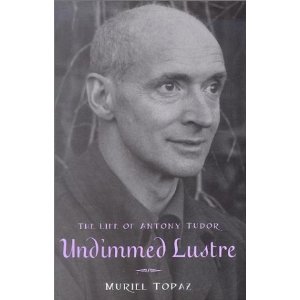
Those interested in reading about him in more detail may want to pick up the book, Undimmed Lustre: The Life of Antony Tudor for a closer look at his life–and his art.

Share

Another dance quote I saw and thought I’d share…there are many out there that I haven’t heard yet, even after being involved with dance for such a long time…

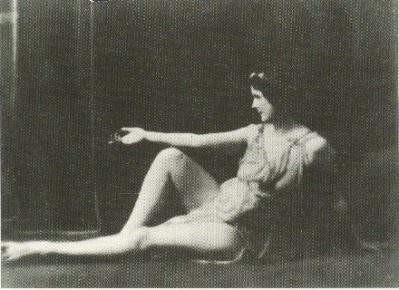
“If I could tell you what it meant, there would be no point dancing it.”
- Isadora Duncan

I love PBS. This is a great resource that provides a dance timeline that dates all the way from 1619 to 2001. Although it isn’t all-inclusive, it does a good job of hitting many of the highlights along the way.

This is perfect for teachers or for those who simply want a deeper understanding of what the historical development of dance has been through time. It is interesting to see it in this format–much different than when you learn about it one piece at a time.

Oh, and they offer a free screensaver too.

Share

After receiving an e-mail today, I wanted to share some links where people can find more information about American Tribal Style Belly Dance to learn more about its history…

  • Fat Chance Belly Dance has several great pieces on their site with information about what ATS is and the history of this particular dance style.
  • Gypsy Horizon Belly Dance has another good piece on the history of ATS.
  • Important names in the development of this dance style include Jamila Salimpour, Masha Archer and Carolena Nericcio.
  • If you have never seen this dance style before, check out this video clip from Fat Chance Belly Dance to get an idea of what it looks like.

Margot Fonteyn.

I was lucky enough to meet her in person when I was a little girl. I still have a black and white photograph that she gave me at the autograph signing. It was a moment, to be sure.

Each of us will have in-person encounters with different people in the dance world and it will mark us in some way.

Interesting how that works.

She was amazing–a true ballerina in every sense of the word. A juxtaposition of soft and strong, she was unlike anyone else I have ever seen. A unque, musical talent. I have compiled a few resources here for those who would like to read a bit more about this amazing lady…or see her dance; if only through the magic of the Internet.

From Ballet.co, a brief, well-done historical piece.

The Ballerina Gallery, a great collection of photos.

Voice of Dance, a video clip of her in Swan Lake.

Share

Many people who teach ballet don’t know much about the history of this art form. Here is a good resource from Northeastern University that provides some of the background–reaching all the way back to the courts of Renaissance Italy.

This site is definitely worth a quick read to brush up on the details if you plan on teaching. It is also a great primer for dancers who have not yet learned about the art form that they are practicing. I found it to be conscise, yet quite detailed.

Sometimes you get the inspiration to write a post from the most unexpected places. I was talking to someone who took the backstage tour at Radio City Music Hall and they really piqued my interest about the venue. I did a little investigating, and was impressed enough to share it with you here on 4dancers. I know if I ever get out that way, I’m going to check it out myself!

The more you look, the more you see.

As I was reading up on the facts about this particular venue, I could easily understsand why this tour is so fascinating. There are many layers to Radio City Music Hall that you might not ever notice if they weren’t pointed out to you. For example, if you look underfoot, the Grand Foyer has a carpet that features the abstract designs of six musical instruments. More examples of this theater’s hidden majesty include the gigantic Wurlitzer organ which has so many pipes that it takes 11 rooms to house all of them, and the four hydraulic elevators which can be utilized on the stage.

Other facets of the theater are so grand that you can’t help but stare in wonder. Look up and you will see 4,000 pound chandeliers floating in the air. The stage itself is enormous–measuring 66 1/2 feet deep and one full city block wide. In fact, this venue boasts one of the largest stages in the world even today.

Home to the world-famous “Rockettes,” this is the spot where the Radio City Christmas Spectacular takes place. (The holiday show draws over 1.2 million people in an 8-week time period each year.) Part of the Stage Door Tour includes meeting a Rockette in person–a fun touch that has been added to the mix.

This art-deco style theater has seen over 300 million visitors since its debut in December of 1932. It acutally closed its doors for a brief period in 1978 before being designated a landmark. In 1999 a massive restoration project began that took $70 million dollars and spanned 8 months.

This spectacular venue has been the setting for everything from “Disney on Ice” to several WNBA All-Star Games in 2004, and it continues to be an important piece of American history when it comes to the entertainment field. For more information about tickets and tours, take a look at the website.

Share

Normally I don’t do these “10 Questions” so close together, but I have to say I was excited about getting this one up! Karen Stelling has been kind enough to share some of her considerable knowledge about Flamenco dance with us today…you’re in for a treat! Who knows…it may even make you want to take a class…

Karen Stelling

1. Can I get your name, location and number of years of experience in the dance world.

My name is Karen Stelling and I currently work and teach in the Chicago area.  I have been studying, performing and teaching  Flamenco and Spanish Dance for over 30 years.

 2. Can you tell me what makes Flamenco dance unique?  

Flamenco dance is just  one part of an entire culture that defines a community of people who came to  together in area of southern Spain, what is now known as Andalusia, over two hundred years ago.  To really understand Flamenco, to know it, requires one to understand and know the gypsy culture that birthed it.

In Flamenco “arte,” there was first the voice or the “cante,”  literally the crying out against life’s cruelty,  as well as happily expressing love of the land, of family and of life.  Then came the guitar to set it all to music  in a wide variety of rhythms or “palos.” Finally, after the singing and the guitar, came the dance. Ultimately, the dance is the outward physical demonstration of this culture, with its struggles as well as great joys that were endured and celebrated.   It is truly a “folk” art form in that at its roots, it is deeply embedded in the gypsy culture of Spain.  There is nothing akin to it in American culture with the possible exception of jazz music.

3. How difficult is Flamenco to learn, and what are some of the major challenges in doing it well? 

Learning to dance flamenco requires a terrific amount of patience and practice.  Because it is largely improvisatory, just like any improvising, one has to acquire good “chops” and understand it all very academically first, before one can begin to let go of the boundaries and explore. This of course takes time!  But to become a knowledgable flamenco dancer, one must study all the different structures which can be in 3, 4, 6 and 12 count phrases!  Many students begin flamenco classes thinking it’s like latin dancing or salsa with easy 1,2,3,4 counts and then wonder why it is so hard to learn.  Each rhythm, or palo, has its own tempo, accents, style and musical structure including how to dance to the singing,  that must also be learned.  There are some dancers who will only perform one particular palo over and over again, because it fits their temperament and allows them the clearest expression.

4. In terms of technique, can you describe some of the things that Flamenco dancers must master? 

Having a good sense of rhythm is paramount and because there is so much percussion inherent in most of flamenco dance, one has to know how to dance on the beat and in the counter rhythm or “contratiempos.”  Flamenco dancers have strong legs and feet…the pounding is part of the job!  Like ballerinas dancing on pointe, one just has to accept a certain amount of discomfort at first and then eventually, one doesn’t notice it any more.  I constantly encourage my students to go for it, put 100% energy into doing heelwork and to avoid doing steps in a weak fashion, “marching in place” rather than digging the feet into the ground.  The studio is the laboratory where you work this stuff out and make mistakes and get out of rhythm but that’s how you learn.   There is also a certain carriage of the body that has a distinctive flamenco look…the arched back, the arms in a very held position with elbows turned out and the “flores” or movements of the hands which need to be in sync with the rest of the dancer’s rhythm and steps. There needs to also be a strong connection to the earth underneath us.  The upper half of the body reaches toward the heavens but the hips and legs and feet all belong to the ground.  Most women have difficulty connecting to their physical, sensual selves and the ability to open up to the earth and yet this is imperative in flamenco.  To feel comfortable in one’s skin and move in a way that is non-pedestrian is very challenging.

 5  How did you fall in love with Flamenco dance? 

I remember seeing a company of dancers perform at Navy Pier in the early 70’s.  They had a little postage stamp of a stage to perform on but it was amazing.  I believe one of the female dancers was a woman named Carmen Mora who later became one of my favorite dancers.  Then, in 1975 when I had the chance to study with Nana Lorca at the Boston Conservatory of Music, I remember being completely overwhelmed by her beauty and grace at the closing concert of the workshop.  She had transformed herself from this tough teacher with no make-up to a stunning performer in amazing costumes and stage presence that lit up the theater.

 6. What is it like to choreograph Flamenco dance?  

The best and most accomplished flamenco dancers may or may not have “set” choreographies. Remember, flamenco originally was a jam session of the folks in the household or the little community.  It was made up on the spot and anyone who wanted to could stand up and sing or dance. This understanding is still prevalent among traditional flamenco dancers.  More frequently, the dancer works with the guitarist and singer to determine which palo will be performed and because the dancer knows how and when the singing will start and end,  he or she creates the dance in the moment.  Most traditional palos have set structures for verses, choruses, silences and so on. The best option is for the dancer and guitarist to co-create the music and choreography at the same time…then it truly is a one of a kind creation. 

For me personally, to choreograph requires one to know the rhythm extremely well and to always honor the singing.  And because there is so much rhythm involved, on Monday, I may decide to accent here and here, but by Tuesday, I’ve “heard” something else altogether and now the accent is there and way over there! 

 7. What type of costuming is involved in Flamenco dance?

Nowdays, comfort is key and lightweight fabrics with fun designs are seen. Typically, women still wear dresses and top and skirt combination’s but many enjoy dancing in trousers which was popularized in the 30’s by the great Carmen Amaya. The traditional “bata de cola” or the dress with the tail, is still used frequently but is very carefully tailored and requires an excellent fit.  Women may also dance with “mantons” or large emroidered shawls which are often incorporated into their costumes.  Depending on the dancer, flowers are still worn in the hair, a distinctive flamenco look.

8. How can people who are interested in doing Flamenco find a reputable teacher? 

Usually by word of mouth but the best way is to ask around and learn something about the instructor’s background, e.g., where and with whom have they studied, what is their specialty and so on. It’s also good to take a number of classes with different teachers until one finds a good match.  Many students want to strengthen technique, others want choreography and still others a chance to perform.  A teacher may have a reputation as difficult but ultimately that means they challenge the student to really work hard and the payoff is great technique.

 9. How are the arms in Flamenco different than other dance styles? 

The arms are carried in front of the body, with elbows raised intentionally in all positions from top to bottom.  There is also a strong angular component when the arms are across the body.  The hands are also an integral part of the arm movements and not just because they are attached at the wrists!  The arms may come to a stop but the hands may continue the movement and rhythm.

10. Can you share something else about this dance style that you think readers may find interesting? 

It truly is one of the hardest dance forms one will ever love!  It is not for the faint of heart because there is so much “multi tasking” going on in every class or performance…one must learn technique and use it well, know the variety of rhythmic structures and their accents, understand the guitar accompaniment, the singing, how to dance in a dress, use a shawl, a fan, castanets and dance in high heeled shoes!  Everything done in heelwork on one side, has to be done on the other side as well!   With all of it’s challenges, it allows a dancer the most expression one can experience while working within a time honored tradition. 

And the best news?  Unlike ballet and other dance forms, where physically the body can no longer execute some movements and age is not a friend, in flamenco, an older body is not the enemy.  An older dancer can imbue her dancing with her life stories and experiences, thereby enriching the presentations. It is very inspiring to see dancers I knew from my “youth” still performing “old school” with just as much passion as they had twenty or thirty years ago! 

I often say once you are sucked into the flamenco vortex, it is hard to escape but… why would you want to? Try a class at least once in your life and see for yourself!

Share

Have you ever been confused by the newer styles of belly dance? Let’s clear things up a bit, shall we? 4dancers contributor, Piper, is back again to sort things out by sharing information about some of the styles that are out there today. But first, some definitions:

ATS = American Tribal Style

ITS = Improvisational Tribal Style

Fusion =  blend of various styles of dance

Now, let’s hear from Karen: 

I teach/perform my own tribal fusion style of dance, but I came out of a class that originally was American Tribal Style.  What exactly is ATS?  Long story short, ATS is a modern style of belly dance that was created by Carolena Nericcio, who formed Fat Chance Belly Dance in 1987 in the San Franciso Bay area. 

It needs to be said that this category of belly dance should be credited to Jamila Salimpour.  She utulized her knowledge of traditional folkloric dance and belly dance by presenting the now infamous Bal Anat production.  It showcased dances from Algeria, Morroco, Turkey, Egypt, Syria and Lebanon.  Thus – tribal style belly dance was born. 

From Fat Chance and Carolena, many troupes have descended and created their own style. 

Some of todays tribal troupes who have roots within ATS have now become what is known as Improvisational Tribal Style.   ATS & ITS tend to be strictly performed by 2 or more dancers – thus, a troupe. 

Both are done with cues from the arms or hands, so both are presented in an improvisational style. And there is something to be said about watching either style of troupes perform – the energy that is shared by the troupe is like no other. 

And now, for fusion.  Now personally, fusion is my favorite.  Fusion is brought about by individuals pulling in their own unique style.  Usually, this style is based on the other forms of dance the performer has studied.  Fusion can be influenced by hip hop, African, modern, ballet, as well as traditional belly dance.  But the key is always to respect the dance.

As with any dancer, it took me a while to find my own voice within tribal fusion.  I felt in the beginning ‘oh – if I’m tribal, then I can’t do ‘X’; but the more I understood what fusion really was, the more I found myself.  I study Egyptian style now, as well as going back to ballet.  I take workshops with some of the best dancers (at least I feel are the best) – famous as well as the unknowns – and I walk away with more knowledge every time.  I’m constantly trying to improve, and will always do so.  

Share

Just a quick note to point out a guest post I did for My Son Can Dance, a blog written by recent guest poster Nina Amir. It is about gender stereotypes and ballet. If you get a chance, drop by and check out her blog–it’s quite interesting!


 Powered by Max Banner Ads 

Image Gallery

More Images