Performance Reviews

UK Dance Festival: Resolution!

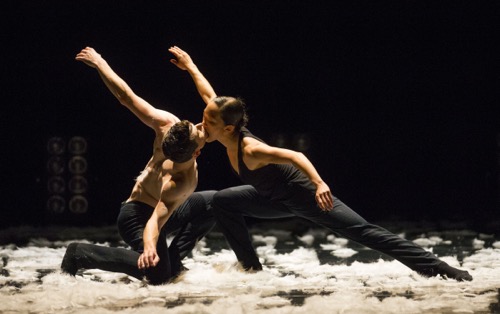
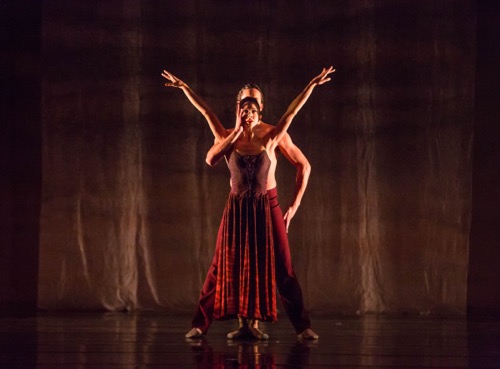
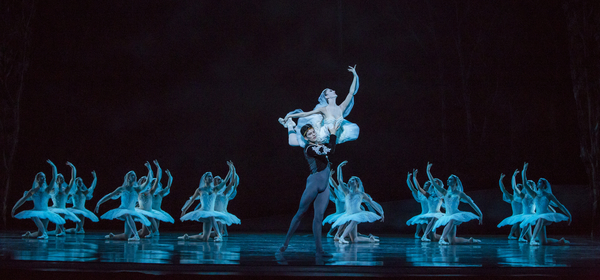
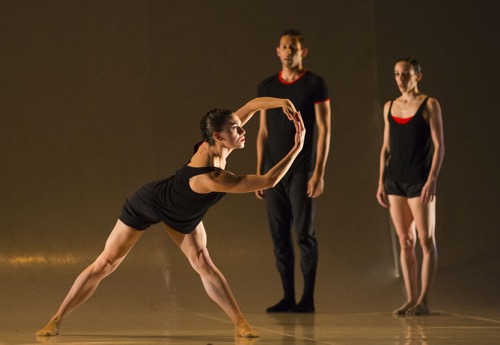
dancer on stage

Resolution! 2013, courtesy The Place, Photo Ben Johnson

by Jessica Wilson

Returning for its 24th edition, Resolution! at The Place is in the process of showcasing the work of 81 dance companies in nightly triple bills, in the biggest festival for new dance in the UK. Running from 8 January to 15 February, Resolution! is one of the best loved seasons for short new dance due to the sheer quantity and diversity of the pieces included over the 27 nights.

Emerging choreographers will have the chance to present their new productions, following in the footsteps of previous applicants such as the renowned choreographers Wayne McGregor, Hofesh Shechter, Kate Prince, and more recently James Wilton and James Cousins, Cousins being the winner of the inaugural New Adventures Choreographer Award. Cousins received in excess of £15,000 to create his own showcase, as well as being mentored by Matthew Bourne. This is just to name a few dance artists who have begun their choreographic careers during Resolution!

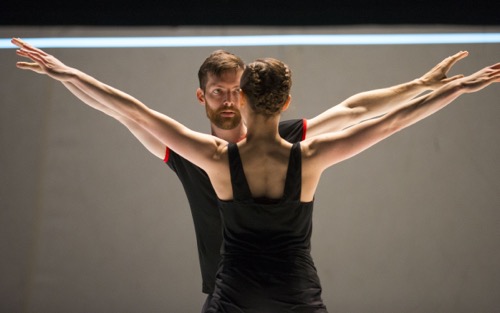
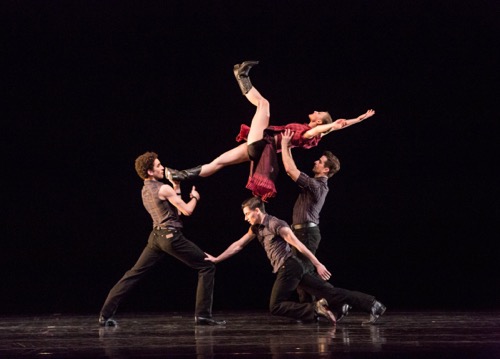
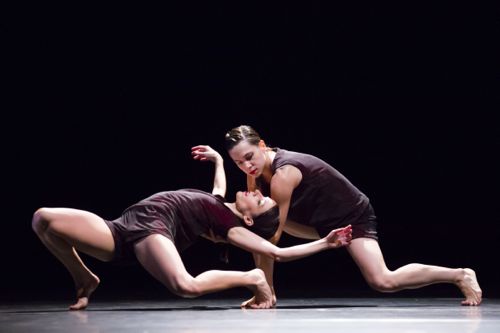
a dance performance

Hack Ballet, Photo by Francis Western-Smith

The festival, which was created in 1990 by The Place’s former Theatre Director John Ashford, is one of the main platforms in the UK facilitating the difficult transition from vocational dance training to the professional performance world. Supported by The Place’s professional team, Resolution! choreographers not only receive technical support, but are enrolled in a series of workshops designed to provide a comprehensive insight into all aspects of the profession, from lighting and design, to press, marketing and social media. In addition to this support of emerging artists, a further element is Resolution! Review, a scheme to support aspiring writers passionate about communicating dance. The scheme has paired these dance writers with six leading dance critics who mentor them throughout the season, contributing valuable experience to the writers’ undeterred enthusiasm.  Each work included in Resolution! is reviewed by both a professional and an aspiring writer, and then posted on The Place’s website.

The works shown so far throughout the Resolution! run have been eclectic, inspiring, reaffirming and decisive, with emerging choreographers paving their way through the sector and making their own mark in the arts world. To see so much up-and-coming work is incredibly inspiring, with the view that today’s dance scene has much to offer, and is continuing to evolve as it adapts to new and rejects old, whilst steadying itself against rooted principals. With choreographers ranging from independent dance artists, to recent graduates, to professional dancers and back again, it is any wonder that the forefront of dance today looks fresh and varied, ready to cater for the audiences who gather with the potential to view the next big thing in dance.

Jessica Wilson

Assistant Editor Jessica Wilson is a final year student at Middlesex university in London, studying Dance Performance. She is also a Marketing and Communications Assistant at the Royal Academy of Dance (RAD).

Jessica reviews London shows for the Society of London Theatre’s initiative for 16-25 year olds, TheatreFix, writes features for A Younger Theatre and blogs for Cloud Dance Festival, with additional press responsibilities. She has completed many marketing internships, the most recent at English National Ballet.

Jessica has also previously interned for SOLT, East London Dance and the ISTD dance examination board. Jessica is a National Youth Dance Ambassador for Youth Dance England, focusing on young people’s access to dance. She is extremely passionate about opportunities for young people enabling them to succeed and hopes to continue advocating this in the future through a variety of means.

Jessica writes about dance for 4dancers, contributes to the “Dance in the UK” section, assists with interviews and handles a variety of social media duties for the site.

The opinions expressed here are Jessica’s alone and do not reflect the opinions of RAD.

0

Utterly Memorable: Approaching Ecstasy

by Gigi Berardi

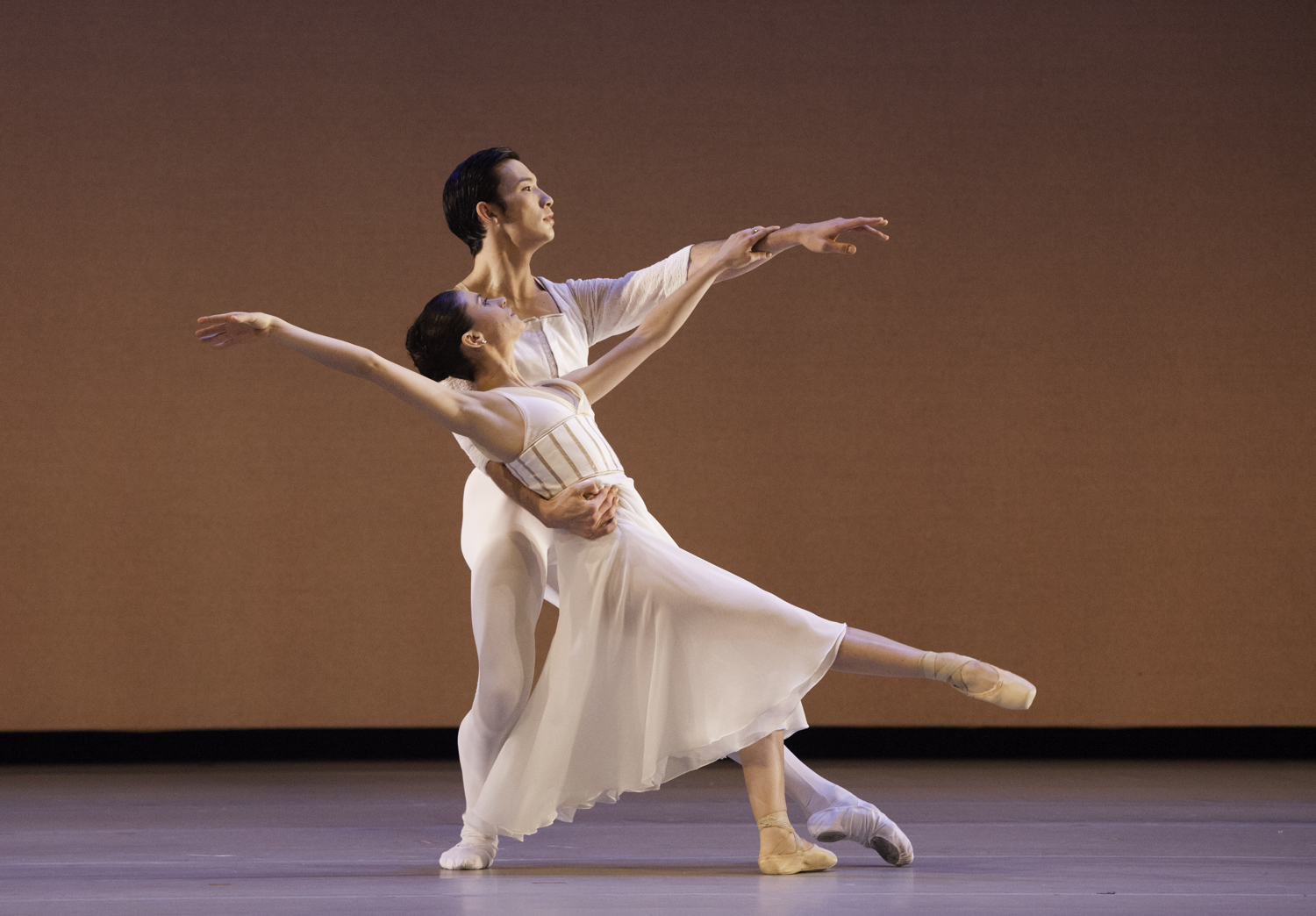
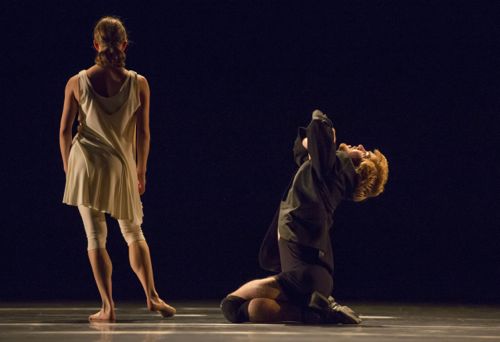
Bamberg Fine Art, Dancers: Chalnessa Eames and Andrew Bartee


In May, Seattle experienced a major dance event with 53 performers on stage and Olivier Wevers producing his best work ever – Whim W’him’s Approaching Ecstasy. The 86-minutes of music was composed by Eric Banks in a Paris attic, and the poems sung a capella (again, for 86 minutes, in English and in Greek) by his 40+ member Esoterics, some of whom danced on stage as well. Banks wrote the music to 18 sensuous poems by the 19th century Greek poet Constantine Cavafy (the audience is treated to just 18 of the hundreds of superb poems Cavafy wrote). It took the composer, choreographer, and other members of the production team four years to get all those artists on stage – well worth the wait for such a memorable performance.

The astounding concert featured the haunting music of Banks and vocal performance by his Esoterics, Seattle masters of contemporary a cappella. The choral setting that Banks provided for Cavafy’s erotic poems was, quite literally, a masterpiece – 18 vignettes, with Wevers’ 18 pieces of choreography – a rightful homage to the closeted gay poet. Every detail of the performance paid tribute to this 19th century quiet man-hero, who lived his life in an office, in a business suit (similar to the one the 53 performers wear on stage). The eerie scenic design, the underplayed overhead lighting, the gut wrenching music expertly played by the St Helens String Quartet (led by the magnificent Michael Jinsoo Lim) – all were utterly remarkable. At the premiere, the music and chorus were beautifully amped and the dance was understated, striking.

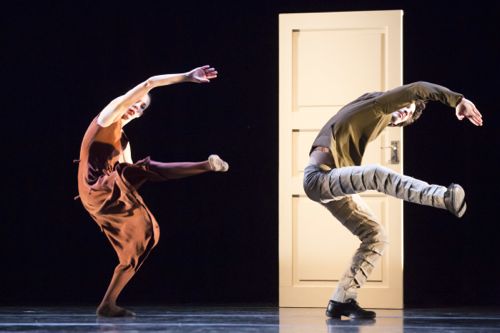
Bamberg Fine Art, Dancers: Lucien Postlewaite and Andrew Barte

Wonder how this will play in Europe.

For dancer Lucien Postlewaite, this was his last performance for Whim W’him (and husband Olivier Wevers) as a Seattleite (he joins Les Ballets de Monte Carlo in August). Their professional and love relationship is so strong, it is clear it will thrive, even as a multicontinental one (see my articles in February and July (forthcoming) issues of Dance Magazine. For now, Wevers focuses on his major upcoming gig at the Joyce, and commissions worldwide – while young Lucien is Europe-bound.

For more on Whim W’him’s niche in the world of Seattle dance, see http://www.dancemagazine.com/reviews/January-2011/Whim-WHim and http://www.dancemagazine.com/issues/January-2011/Seattle-Takes-Off).

Gigi Berardi

Gigi Berardi holds a MA in dance from UCLA. Her academic background and performing experience allow her to combine her interests in the natural and social sciences with her passion for dance, as both critic and writer. Over 150 articles and reviews by Ms. Berardi have appeared in Dance Magazine, Dance International, the Los Angeles Times, the Anchorage Daily News, The Olympian, The Bellingham Herald, and scientific journals such as BioScience, Human Organization, and Ethics, Place, and Environment. Her total work numbers over 400 print and media pieces.  Her public radio features (for KSKA, Anchorage) have been recognized by the Society of Professional Journalists.  She has served on the Board of Directors of the Dance Critics Association, and is a member of the American Society of Journalists and Authors, as well as Book Review editor for The Journal of Dance Medicine & Science.  A professor at Western Washington University, she received the university’s Diversity Achievement Award in 2004.  Her fifth book, Finding Balance: Fitness and Training for a Lifetime in Dance, is in its second printing. Her current book project is titled A Cultivated Life.

Email: Gigi.Berardi@wwu.ed<mailto:Gigi.Berardi@wwu.edu>u

Website: http://myweb.facstaff.wwu.edu/~gberardi and http://www.gigiberardi.com/

Blogs: http://blog.gigiberardi.com/ and http://resilientfarmsnourishingfoods.blogspot.com/

0

Hubbard Street’s Summer Series – Complex and Sublime

by Catherine L. Tully

After a strong spring program, expectations ran high for Hubbard Street Dance Chicago’s Summer Series at the Harris Theater. The line-up features three pieces—an unusual collection of choreography that takes the audience on a journey that they are certain to remember for a long time to come.

Choreographed by Alejandro Cerrudo, “Malditos” was originally a collaborative effort between Hubbard Street and Nederlands Dans Theater. Set to music from the film, The Beat My Heart Skipped (composed by Alexandre Desplat), one of the most striking features of this piece is the lighting design by Tom Visser. At times it barely illuminates the dancers—the visual equivalent of a whisper, making the viewer almost lean forward in their seat to watch the movement. Indeed, nothing about Cerrudo’s choreography shouts; it’s not showy even when it’s infused with energy. Instead it melts and dissolves through space, much like the dancers that come and go seemingly out of nowhere from the back of the stage.

Featured next is William Forsythe’s “Quintett” – and Hubbard Street has the honor of being the first American company to perform this work, first created in 1993. Set to U.K. composer Gavin Bryars’ composition “Jesus’ Blood Never Failed Me Yet”, it opens with five dancers, a stark white set–and a palpable feeling of discomfort.

Hubbard Street Dancers Penny Saunders and Jesse Bechard. Photo by Cheryl Mann.

In an unapologetic fashion, the audience is quickly pulled into this private, intimate setting. Dancers offer brief moments of tenderness, surrounded by explosive, sometimes unsettling sequences of movement. “Quintett” isn’t a passive piece where the audience gazes upon the dancers as they entertain. In fact, giving in to the uncomfortable feelings generated by the droning loop of the soundtrack and the unexpected movement patterns is almost a requirement if any sense of connection is to be found within the piece. This acceptance doesn’t come easily, but with it “Quintett” begins to transform, rewarding the viewer for the struggle.

“THREE TO MAX” is the final piece, originally created for Hubbard Street as a collage of Ohad Naharin’s works over the last decade. From the sensual hip circles seven women perform from a seated position on the floor to the “snapshot” movements that pulse out from a counted vocal rhythm, this is a piece that truly lets the company shine. Jeans, t-shirts and tank tops outfit the dancers in simplicity as they perform movements that range from clock-like ticking of the limbs (complete with vocals) to arabesques with arms that float skyward like a long swath of ribbon suspended in the air.

Hubbard Street Dancer Robyn Mineko Williams in Ohad Naharin’s THREE TO MAX. Photo by Todd Rosenberg

Although the collection of his works here are each quite different they are blended together well, and selecting “THREE TO MAX” as the final piece is a fitting end to a wonderfully executed program. Chicago should be proud—there’s nothing quite like Hubbard Street—and this is a program to prove it.

Hubbard Street Dance Chicago is at the Harris Theater through June 3rd, which will also be Robyn Mineko Williams’ final performance after 12 years with the company.

1

Review: Joffrey’s “Spring Desire” Program

by Catherine L. Tully

Victoria Jaiani and Fabrice Calmels in Age of Innocence, choreographed by Edwaard Liang, Photo by Herbert Migdoll

Love, longing and sensuality are at the core of the Joffrey Ballet’s “Spring Desire” program which opened Wednesday night at Chicago’s Auditorium Theatre. The three neo-classical works on the program include the critically acclaimed “Age of Innocence” by Edwaard Liang, In the Night by the celebrated choreographer Jerome Robbins and the world premiere of Incantations by Val Caniparoli.

Set to the music of Philip Glass and Thomas Newman, Age of Innocence opens the evening with its tense, formal underpinnings—expertly juxtaposed with moments of passion and the yearning to express that which is in the heart. Maria Pinto’s thoughtful costume design cements the 18th/19th century vibe without being too literal, and enormous red velvet curtains are the only backdrop needed to evoke a formal ballroom atmosphere that is filled with both grandeur and repressed emotion.

To begin, the dancers dutifully line up, men on one side, women on the other. Hands extend and are accepted gracefully, but the hidden dialogue of which dancers long for one another remains frozen beneath the surface—cloaked in ritual. The First Dialogue sequence gives a first glimpse of that ache, when Jeraldine Mendoza and Mauro Villanueva suddenly find themselves involved a spinning, romantic match that transcends the rules of courting.

The next sequence, titled simply, The Men, is indeed a powerful display of manliness, executed with verve and confidence by Raul Casasola, Aaron Rogers, Ricardo Santos and Temur Suluashvili. The highlight of the piece, however, was most certainly Victoria Jaiani and Fabrice Calmels, who treated the audience to a riveting performance in the Obey Thee sequence.

April Daly and Miguel Angel Blanco in In the Night, choreographd by Jerome Robbins, Photo by Herbert Migdoll

Next up was In the Night, an enchanting look at love, choreographed by Jerome Robbins in 1970. This timeless piece consists of three pas de deux that explore relationships which are all in very different places. The backdrop provides a guide to the pulse of each pairing, with sparkling stars for young romance, formal chandeliers denoting a more guarded partnership and shooting stars to illuminate the tumultuous union that runs both hot and cold. More traditional in style than either of the other two pieces, this is Robbins at his finest, and the dancers rise to the occasion here. Set to the music of Chopin, pianist Paul James Lewis provided flawless live accompaniment for the piece.

Joanna Wozniak and Matthew Adamczyk in Incantations, choreographer by Val Caniparoli, Photo by Herbert Migdoll

As the curtain rose to reveal the world premiere of Incantations, a visual clue provided a hint as to what the audience was about to see. Hanging high on the right-hand side of the stage loomed a group of large spring-like fixtures that are reminiscent of beehives—a harbinger of what was to come in the choreography. Almost immediately, dancers began to flash across the stage with lightning speed, performing unusual sequences of movement—some of which are staggeringly difficult and wonderfully complex. Indeed, nearly the entire piece was infused with a buzzing, almost erratic energy that keeps building, lending a rather “showy” feel to much of the performance.

Occasionally there was a lapse in timing, yet all was immediately forgiven when the next cycle of intricate movements began. Some of the swirling motions seemed almost like a nervous habit after a while, but overall it was the continuous motion and energy that really took center stage. The music of Russian minimalist composer Alexandre Rabinovitch-Barakovsky and spectacular lighting design by Lucy Carter added both frenzy and focus to the work.

Although splendidly athletic, Incantations rides along the edge of being tiring for the viewer; but just when the piece threatens to overwhelm, release was finally granted through the absolutely glorious pairing of Joanna Wozniak and Matthew Adamczyk, which transformed the piece both in mood and motion. Here Caniparoli takes the dancers down from a mindless, wild energy to a softer exploration that still offers complexity paired with exquisite skill. The duet finishes in a seamless whirling motion that echoes the earlier chaos—but in a much more forgiving fashion.

Performances through May 6th at the Auditorium Theatre


0

Cerrudo’s “Little mortal jump” – Cinematic and Intimate

by Catherine L. Tully

Hubbard Street dancers Kellie Epperheimer & Jesse Bechard in Alonzo King’s Following the Subtle Current Upstream. Photo by Todd Rosenberg

Hubbard Street Dance Chicago’s spring program at the Harris Theater was a triumph in three parts—beginning with the compellingly graceful work “Following the Subtle Current Upstream” by Alonzo King. A perfect showcase to display the technical expertise of the company, the choreography here is filled with dynamic patterns that explore and transform, and it is set to a score of sounds that include bells, drum beats and vocals.

Hubbard Street Dance Chicago in Sharon Eyal’s Too Beaucoup. Photo by Todd Rosenberg

Offering a completely different landscape, Israeli choreographer Sharon Eyal’s “Too Beaucoup” was the final program piece. The large ensemble of dancers coupled with the intense lighting and precise, symmetrical choreography gives the feeling of staring at a 3-D painting—where you wait for the hidden picture to pop out if you look at it just right. With its often heavy, hypnotic thumping beat and cast of identically-clad robotic characters it’s on the lengthy side, but the overall sensory experience is electrifying.

Hubbard Street Dancers Jesse Bechard & Ana Lopez in Little mortal jump by Hubbard Street Resident Choreographer Alejandro Cerrudo. Photo by Todd Rosenberg

Sandwiched between these two audience favorites was “Little mortal jump”—a world premiere by resident choreographer Alejandro Cerrudo—and it did not disappoint. Relationships between the featured dancers started out playful; indeed almost comical, reminiscent of boys and girls trying to flirt for the first time, pulling pigtails and teasing one another at recess. But despite the lighthearted introduction to his work here, Cerrudo is not content to showcase the relationships veiled in a shallow, childish simplicity. Instead the partnering throughout is intricate and rich, displaying a maturity that is at the same time surprising and satisfying.

Cerrudo succeeds in establishing a rapport with the audience in a friendly, approachable way and only then begins to peel away the layers of relationships by emphasizing certain moments vividly. “Little mortal jumpcontinues to evolve until suddenly you are in the middle of something powerful—not playful. Laying this type of groundwork leaves the audience feeling emotionally invested rather than embarrassed at the glimpses of intimacy that are to come. One time it’s a momentary (but vivid) facial expression that connects. Another comes in the form of an intense, almost desperate slow-motion sequence during a duet.

Hubbard Street Dancers Kevin Shannon & Alice Klock in Little mortal jump by Hubbard Street Resident Choreographer Alejandro Cerrudo. Photo by Todd Rosenberg

A stark backdrop of enormous black cubes added a surprising energy to the work as they rolled around on silent casters, sectioning off different parts of the stage and adding emphasis throughout the piece. Sometimes the cubes became a part of the dance itself, while other times they functioned more like parenthesis around a phrase as bodies moved within their confines. The simple set pieces added a sophistication that was palpable, and they provided the perfect climax for the ending as they spun wildly with dancers disappearing behind them—a final surprise.

In this, his 10th piece for the company, Cerrudo has succeeded in taking elements from his previous works and fusing them together into a fully-formed vision that connects strongly with the audience. “Little mortal jumphas a definite cinematic quality to it which serves the piece well, and it is abundantly clear that Cerrudo understands both his audience and how to draw the best work from the dancers in this talented company.

It will be interesting to see where his choreography goes from here.

2