dance spirit
10 Questions With…Tim O’Shei
Today on “10 Questions With…” we have Tim O’Shei from Live! Starring … You!

1. Can you tell readers a bit about your background in writing?
Sure. I’ve always focused on entertainment, sports, business and children’s writing. The magazines I’ve written for range from Dance Spirit to The Sporting News to Scholastic’s Scope, which is for middle schoolers. As an author, I’ve written more than 60 books for kids on subjects like spies, princesses, and survival.
One of my favorite things about writing books is author visits in schools. When I do those visits, I like to tell kids about my succession of dreams, all of which seemed to fail (but actually didn’t): When I was 4, I wanted to become Superman – but couldn’t fly. At 10 I wanted to become a rock star – but the only instrument I was good at was the tuba. Then, at 14, I wanted to be a baseball player — but couldn’t hit the ball.
By 16, I realized I was pretty good at writing, and that I loved doing it. I pitched a story about a baseball scout (who was also a family friend) to a national magazine called Baseball Digest. The editor called and said, “I like your idea, but I have no idea if you can write. Go ahead and do it, and if we like it, we’ll pay you $150 and publish it. If not, then that’s it.” So I went ahead and did the interviews, wrote the story, and got it published. The editor was pretty happy with it and offered for me to do more writing for the magazine. So, in 11th grade, I ended up interviewing big-league baseball players in the locker room and on the field.
Through that, I realized that that writing was a great way to touch all of my dreams – and in a sense, make them come true. Over the next bunch of years, I interviewed hundreds of athletes as a sports writer and hundreds of performers – including rock stars – as an entertainment writer. Once I got to play a game of “professional” baseball, which was actually a movie shoot. (I was writing a story about this baseball movie and they asked me to be an extra, playing left field for a team called the Omaha Royals.) I even interviewed two actors who played Superman – Christopher Reeve and Dean Cain – which I suppose is the closest I could possibly come to that dream!
2. You have written for dance publications during your career. Which ones have you done articles for and how did you get involved with the dance world?
I’ve written a bunch of stories in the last four to five years for Dance Spirit and Dance Teacher. Both are great magazines. I got started when I met a woman named Katia Bachko, who at the time was a Dance Teacher editor, at a writing conference in New York City. I was working on the original Live! Starring … You! book at the time, and wanted to incorporate dance into it. I figured the best way was to write about it.
When I met Katia, she looked at me and said, a bit hesitantly, “Do you dance?” I’m 6-foot-1 and more than 200 pounds — and I wish I could dance.
“No,” I told her. “But my wife was a dancer. And I’m a teacher.” (Which is true — I’ve taught elementary, middle, high school and college.) Then I added, “So I figure I could write for Dance Teacher!” That worked. I started writing for DT, and DS soon followed.
A funny side note: I actually made my dance debut recently in a dads’ routine for my daughter’s studio. I was dressed as a tulip – with green petals and pink tutu and ribbon socks – and we did a two-minute ballet to Tiny Tim’s “Tiptoe Through The Tulips.” That really made me appreciate dancers’ skills!
3. What do you enjoy about writing articles that have to do with dance?
Dancers impress the heck out of me. They’re so incredibly skilled and passionate. Dance is a perfect mix of athleticism, story telling and visual art.
Beyond that, I’m also fascinated by the mentality that dancers in the commercial world must adopt in order to survive. When you’re a backup dancer for big pop star – Lady Gaga, Beyoncé, Usher, Britney, Rihanna, Justin Bieber, whomever – you’re right on stage, playing a key role in a huge show, and on the receiving end of massive cheers. But they’re almost never meant for you. And once you’re offstage, the makeup is off and the street clothes on, you’re a regular person. Depending how you look at it, that’s either seriously cool or (if you want to be the star) will leave you desperately wanting more.
4. Can you talk a bit about what your latest project, Live! Starring … You!, is about?
Guest Post: Writing About Dance
Today I’d like to welcome Nina Amir, author of the popular dance blog, My Son Can Dance. I asked her if she would share some thoughts on writing about dance, and she was kind enough to oblige…enjoy!
I’ve been a journalist for more than 30 years. However, when I began writing back in high school, I never thought I’d one day write about dance, since I didn’t dance. It took having a son with aspirations of becoming a professional dancer to set me on the road to becoming a dance writer.
In fact, back in my high school days when I received my first by lines, and even after graduation from college with a degree in magazine journalism, I knew nothing about dance. I took a few dance classes in elementary school, but I only wanted to pursue tap, and the instructor insisted that I had to also take ballet. Although I understand why she imposed that rule now, at the time I had no idea and quit. It was only tap or nothing as far as I was concerned. Beyond that, I’ve always enjoyed watching dance and “going dancing.” That served as the extent of my dance education…until my three-year-old son decided he wanted to learn how to dance.
I have a tendency to focus my writing on the issues in my life. By that I mean that I like to find solutions to problems by seeking out experts and writing articles based on the information they provide. For example, when my son and daughter were forced to change schools three times in three years, I wrote an article about the affects changing schools has on children. When my children both found themselves in competitive situations—she as an ice skater and he as a member of a competitive dance team—I wrote about the risks and rewards of competition for young children. So, as my son got more and more involved in dance, I took the issues he faced as a young male dancer onto the written page…and into dance publications.
The first article I wrote tackled the issue of how to keep boys involved in dance and appeared in Dance Teacher magazine. At the time, I was thinking about the difficult time young boys have as dancers, since they are almost always the only males in their classes. This led me to begin on a larger project, one I continue working on today.
I began research for a book about how to mentor boys who want to become professional dancers. My premise revolved around the fact that boys who do want to dance as a career have at tough road to hoe to get onto that stage. Yes, the spotlight tends to be on them whenever they hit the stage, but when off the stage they get teased, ostracized and generally feel different then their peers who play football, soccer or do gymnastics and other “acceptable” male activities. They also have little time to socialize if they have friends outside the dance studio. I interviewed several professional dancers, wrote a book proposal and began marketing the book.
In the meantime, I began building a platform for this book. In other words, I began trying to build my name in the dance world. I continued to write for dance magazines, such as Dance Spirit, Dance Teacher and Movmnt, and I began a blog about my son’s issues in dance and outside of dance and my own issues raising a dancing boy.
These activities have actually proved quite rewarding. They’ve helped me become more knowledgeable about dance. They’ve also helped me open some doors for my son. And they’ve helped me find solutions to problems my son has faced as a dancer. (Once, when I wasn’t careful, my blog created a problem for him…but I learned about the boundaries I needed to stay within when writing about him and his dancing experiences.) Additionally, writing about dance has turned into a rewarding avenue for me as a writer. Since I have become quite interested in dance in general, I love writing about the subject, speaking with dancers, helping dancers, and generally supporting the art form.
For other people—writers and dancers—interested in writing about dance, here’s my advice on how to get started as a dance writer:
- Think about what issues you face or you see in the dance world. Propose these to editors, and do so with a personal twist. You don’t necessarily have to say that you experience the issue yourself, but let them know that you have seen the issue first hand or that you know people who have. If you or some other dancer you know has experienced something, in all likelihood other dancers have, too.
- If you can suggest professionals in the industry to interview, do so. Editors love it when you have new sources to offer.
- If you see something exciting happening regionally, don’t be afraid to send a query on the topic to a national magazine. However, you might want to try and give the story more appeal by tying in to a trend or other similar happenings across the country.
- Be sure to tell the editor why you are the best person to write this story. Don’t just include your dance credential; also include your writing credentials. You must be a good writer and researcher to write for a national magazine.
- If you’ve never done much writing and have no published clips, try suggesting a short piece for a section of the magazine that features short articles.
- If you don’t have published clips, try writing about dance for the local parenting magazine, regional publications or newspapers in your area. Once you can show that you can and do write about dance on a regional level, you’ll have an easy time convincing national editors that you can do the same—or better—job for them.
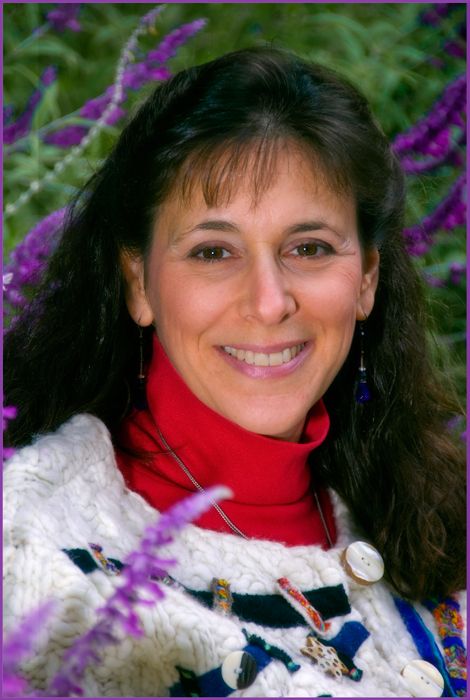
BIO: Nina Amir is a seasoned journalist, nonfiction editor, author, consultant, and writing coach with more than 30 years of experience in the publishing field as well as the founder of Write Nonfiction in November, a blog and writing challenge. Currently, she also serves as the Jewish Issues Examiner and a staff writer at Grocery Headquarters magazine. Additionally, she is the author of the popular dance blog, My Son Can Dance.
Using her degree in magazine journalism, she has edited or written for more than 45 local, national and international magazines, newspapers, e-zines, and newsletters on a full-time or freelance basis. Her essays have been published in five anthologies and can be found in numerous e-zines and Internet article directories. She also has a proven track record as a nonfiction book editor; her clients books have been successfully self-published and purchased by Simon and Schuster, William Morrow, Sounds True, and O Books.
Amir is an inspirational speaker, spiritual and conscious creation coach, teacher, and the regular holiday and spirituality expert on Conversations with Mrs. Claus, a weekly podcast heard in more than 90 countries and downloaded by 110,000 listeners per month (www.thefamilyyak.com). She has written and self-published 5 booklets and workbooks and currently is writing five books, including So You Think You Wanna Dance, Advice and Encouragement from Professional Male Dancers for Those Who Want to Follow in Their Footsteps. Through her own writing and speaking, Amir offers human potential, personal growth and practical spiritual tools from a Jewish perspective, although her work spans religious lines and is pertinent to people of all faiths and spiritual traditions.
Amir lives in Los Gatos, CA , with her husband and two children.
4