karen hersh

On Professionalism…

Today we have some musings from 4dancers contributor Karen Hersh on professionalism…
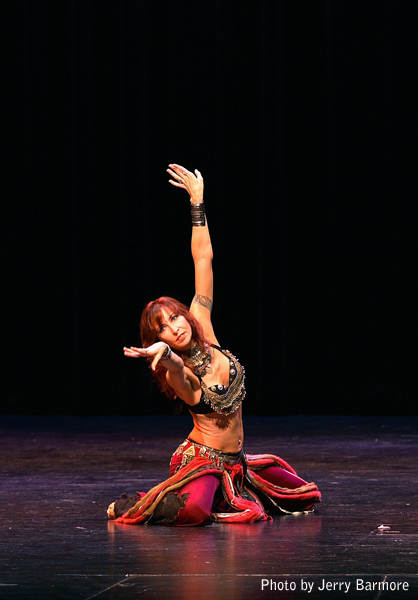
Karen Hersh

By definition, the word professional means to follow an occupation as a means of livelihood or for gain; professionalism or professional standards means the skill, competence, or character expected of a member of a highly trained profession.  So while I can understand why everyone ties being a professional belly dancer (or any dancer really) as to being paid, I think we need to take a bit of a step back and extend the definition to attitude as well. 

Recently, I was dancing as part of a ‘non-professional’ troupe at a local hafla, (an event held by belly dancers to showcase themselves or their students), when one of the women said something that just stopped me in my tracks.  It was to the effect of ‘well, I know I don’t have too much to worry about because I’m not a professional’. 

Why did it stop me?  Because whether or not one is a ‘professional’, the attitude of always doing your best should be there, whether you are a student or a professional.  Professionalism doesn’t start with your first paycheck, it starts the moment you walk into your first class as a student:  you show up on time, ready to learn.  

In belly dance, I think one of the goals for our students should be to have the opportunity to perform at haflas.  While these are generally non-paying events (for the dancers), they should still be treated as if they were.  Anytime one performs, that professional attitude must be there. 

I strongly believe that all students should be taught early on that being a professional also means putting in the time and energy in to learn your dance piece, to be at rehearsals, be on time, and to be supportive and respectful of the rest of the class and/or troupe. And this is part of the instructor’s responsibility–to instill these qualities in their students. 

All of us are putting ourselves out there in a performance setting for our peers and our friends and family.  It seems only right to be showing our best professional attitude all the way around, doesn’t it?
0

Finding Your “Voice” In Belly Dance

by Karen Hersh

I have been in the belly dance community as an instructor and performer for several years, and I have had the pleasure of studying and performing with people who have been in this art form for decades.  What drew me to stay in belly dance was a sense of sensuality, and a bit of sisterhood, especially since I started with learning American Tribal, as this form is generally done with a group of two or more. It’s a great energy to dance with a group! 

Karen Hersh

Now, I realize that when ATS or Tribal in general was first brought into the light, some people who had been dancing classical Egyptian/Oriental had issues with it; it’s not pure Oriental, etc.  Even so, little by little, Tribal was being accepted. It embraces the old with the new. 

Belly dance is the one true form of dance that does embrace every body type – which is wonderful!  We all share one common denominator:  the love of dance. We are a sisterhood, a community. But are these words overused and spoken with emptiness? As a community of sisters, we should encourage each other and our students to continue their studies.  This means taking not only additional belly dancing, but ballet or other styles–with various instructors.  For our students, (and for us as well), these additional classes can assist in finding one’s own voice in dance. 

There is nothing greater for me as an instructor than to see a student who has taken fusion, ATS, Egyptian, etc. to step out and perform, because they’ve taken a pinch from X, a handful from Y, a little bit of Z and mixed in their own personality – and now we see them really dance!  We see a glimpse inside their soul. 

Who are we to put limitations on our students and tell them they can’t take from other instructors? Don’t we as instructors seek to improve our quality of dance?  Wouldn’t it be hypocritical for us to stop our students from furthering their knowledge?  And shouldn’t we encourage/support their performance opportunities?  Nothing would be more satisfying to me then to see a student of mine surpass me; grow past me. That truly would be the highest compliment I could receive.

Share

0

Belly Dance: ATS vs ITS vs FUSION

Have you ever been confused by the newer styles of belly dance? Let’s clear things up a bit, shall we? 4dancers contributor, Piper, is back again to sort things out by sharing information about some of the styles that are out there today. But first, some definitions:

ATS = American Tribal Style

ITS = Improvisational Tribal Style

Fusion =  blend of various styles of dance

Now, let’s hear from Karen: 

I teach/perform my own tribal fusion style of dance, but I came out of a class that originally was American Tribal Style.  What exactly is ATS?  Long story short, ATS is a modern style of belly dance that was created by Carolena Nericcio, who formed Fat Chance Belly Dance in 1987 in the San Franciso Bay area. 

It needs to be said that this category of belly dance should be credited to Jamila Salimpour.  She utulized her knowledge of traditional folkloric dance and belly dance by presenting the now infamous Bal Anat production.  It showcased dances from Algeria, Morroco, Turkey, Egypt, Syria and Lebanon.  Thus – tribal style belly dance was born. 

From Fat Chance and Carolena, many troupes have descended and created their own style. 

Some of todays tribal troupes who have roots within ATS have now become what is known as Improvisational Tribal Style.   ATS & ITS tend to be strictly performed by 2 or more dancers – thus, a troupe. 

Both are done with cues from the arms or hands, so both are presented in an improvisational style. And there is something to be said about watching either style of troupes perform – the energy that is shared by the troupe is like no other. 

And now, for fusion.  Now personally, fusion is my favorite.  Fusion is brought about by individuals pulling in their own unique style.  Usually, this style is based on the other forms of dance the performer has studied.  Fusion can be influenced by hip hop, African, modern, ballet, as well as traditional belly dance.  But the key is always to respect the dance.

As with any dancer, it took me a while to find my own voice within tribal fusion.  I felt in the beginning ‘oh – if I’m tribal, then I can’t do ‘X’; but the more I understood what fusion really was, the more I found myself.  I study Egyptian style now, as well as going back to ballet.  I take workshops with some of the best dancers (at least I feel are the best) – famous as well as the unknowns – and I walk away with more knowledge every time.  I’m constantly trying to improve, and will always do so.  

Share

1

Introducing…Karen Hersh

In 2010 4dancers readers will hear from a range of guest contributors here and there, talking about different styles of dance, or just sharing thoughts about the dance world. Today I would like to introduce Karen Hersh, a teacher and performer in the American Tribal Belly Dance style. I’ve asked Karen to share some information about how she became involved in dance so that you can get to know her a little bit…

My name is Karen, but I dance under and answer to the name of Piper.  I began dancing close to 20 yrs ago in California when I decided to get in shape.  I signed up for a what I thought was a ‘ballet’ workout class but in reality, it was a ballet floor bar class that was taught by a woman who studied and performed in Russia.

After a few years of that, I moved back to the Chicago area and started taking modern dance classes in Oak Park and in Chicago, and eventually had the privilege to study for a few years under the direction of the dance company Deeply Rooted.  While I loved dancing with Deeply Rooted, I felt I needed to leave and focus on my personal life (as I just moved in with my now husband Brian).  After about a year being away from dance, he suggested I find something to do.  And so I did:  belly dance.  

I took my first class at Belle Plaine studios with a woman named Taj.  I had no idea that I was at the beginning of my tribal fusion dance career.  After Taj, I moved onto taking American Tribal Style (ATS) with Gabrielle Deschaine in Berwyn/Forest Park.  And the rest, they say, is history. 

Since that little beginning with Taj, I’ve taken as many classes as possible to improve on my own unique style of tribal fusion.  I’ve been blessed to have been invited to teach overseas in the UK at Tribal Ford in England, (which is a weekend long group of workshops held in the Ford Castle located in Northumberland, England), and then 2 different workshops in Dublin and Glasgow.  I am currently teaching my style of tribal fusion at Pineapple Dance Studio in Forest Park.

Share

1
