teacher
Pas de Trois: What Is The Most Important Quality In A Dance Teacher?
If you didn’t catch our post last week, I’d like to explain again what we are trying to do here–and encourage you to join in!
Pas de Trois at dancing3.com is a collaboration between David Hunter from Ballet for Men, Henrik Lamark from Tights and Tiaras and myself–as well as all of the readers out there. We are coming together to discuss various issues and ideas about dance. We are actively exploring ways to work together so that there can be a better sense of community on the web for those interested in exploring dance in depth with one another.
Each week we’ll pose a question and answer it one by one on our blogs. This week’s question is “What is the most important quality in a dance teacher?”
I have been both a student and a teacher, so I really had to stop and think this through from both perspectives. I find that the answer is similar–I think that the most crucial skill is the ability to communicate.
As a student, I was striving to understand how to improve my technique. As anyone who has taken dance knows–this does not come naturally. The teacher must be able to tell the student exactly what they need to do to adjust what they are doing to make it right. Those teachers that could do that for me made me dance better. And what’s more–I found I really gravitated toward their classes. I didn’t necessarily like them more, but I learned from them.
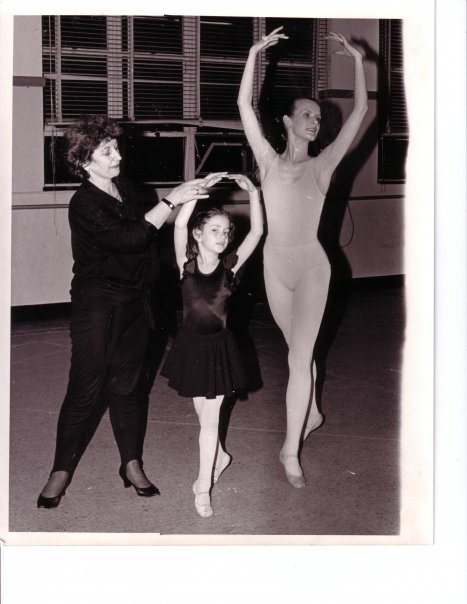
As a teacher, I know that finding the right way to communicate with a student can take a while! When I make corrections or comments I try to say things in a variety of different ways, because I know that what impacts one person and gives them that “eureka!” moment may not do anything at all for another one. It is also important to use visual repitition so that students who don’t do well with verbal direction can see what you are saying.
There are many important qualities that dance teachers should have. It’s hard too choose just one, but after a bit of thinking, I’d say I’m pretty comfortable with the one that I picked. What do you think? Join us here and share your answer!

4dancers: Guest Posts Wanted
Today just a quick announcement…
I am looking for a few guest posts on the following subjects:
+ Triumphs and tragedies–send me your biggest accomplishment or your most embarassing moment as a dancer. Or send both.
+ Inspiration–share a story about a teacher that inspired you.
+ Recital advice–what have you learned that you can share with others?
If you are interested in doing a guest post on one of these subjects–just send it to me in the body of an e-mail, with the subject line “guest post”. If you have a photo as well, that would be great, but it isn’t mandatory. Please include your first and last name, your location and a sentence about how you are connected to the dance world.
My e-mail is writer (at) catherineltully.com (Make sure you include the l)
I look forward to hearing your stories!
Teaching Tip: For The Older Teacher
I am a teacher who is over 40, and I have noticed a few things that I would like to pass along to teachers who are no longer dancing full-time. Please feel free to share your own if any come to mind that aren’t on this list:
+ Be sure to warm up your feet and ankles prior to teaching a class. Taking a few minutes to stretch out your Achilles tendon and calf muscles can make a world of difference. I’ve noticed that my ligaments and tendons need a little blood flow to work properly now. Demi plies and slow ankle circles make a good warm-up.
+ Choose shoes carefully. I found that once I stopped dancing full-time it was less comfortable to wear regular technique slippers. I now use “dance sneakers,” but have seen teachers wear everything from character shoes to jazz shoes for teaching class. The important things are comfort and the ability to show the steps clearly to students.
+ Utilize students for demonstration. I’m no longer up to doing a grand jete–much less doing one without having done a barre first. When you can, use a student to demonstrate steps that can possibly cause you injury. It makes the student feel good and saves your body the impact.
+ Schedule yourself sensibly. You may want to spread classes out over a few days rather than doing four of them back-to-back. Your body will tell you what it can and cannot handle, so be sure to pay attention to the signs of overdoing it. If you feel stiff, bruised or exceptionally tired, you may be taking on too much at once.
It can be very difficult to adjust your teaching style to adapt to changes in your body as you get older. As dancers we don’t like limitations–we have been taught to push our bodies as hard as we can. Even so, making some minor adjustments can mean that you are able to teach more effectively as well as feel better physically, so it really is worth it in the long run.
Any tips to share?
2Introducing…Karen Hersh
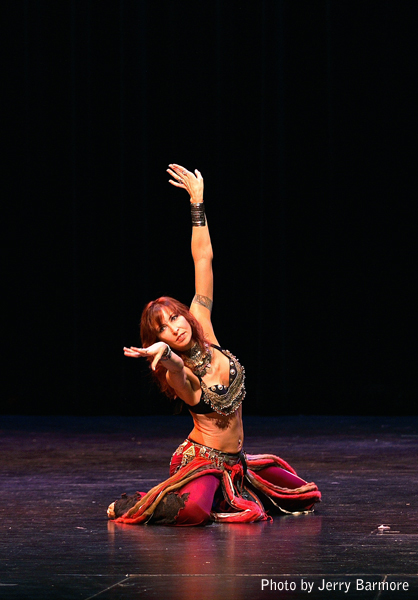
In 2010 4dancers readers will hear from a range of guest contributors here and there, talking about different styles of dance, or just sharing thoughts about the dance world. Today I would like to introduce Karen Hersh, a teacher and performer in the American Tribal Belly Dance style. I’ve asked Karen to share some information about how she became involved in dance so that you can get to know her a little bit…
My name is Karen, but I dance under and answer to the name of Piper. I began dancing close to 20 yrs ago in California when I decided to get in shape. I signed up for a what I thought was a ‘ballet’ workout class but in reality, it was a ballet floor bar class that was taught by a woman who studied and performed in Russia.
After a few years of that, I moved back to the Chicago area and started taking modern dance classes in Oak Park and in Chicago, and eventually had the privilege to study for a few years under the direction of the dance company Deeply Rooted. While I loved dancing with Deeply Rooted, I felt I needed to leave and focus on my personal life (as I just moved in with my now husband Brian). After about a year being away from dance, he suggested I find something to do. And so I did: belly dance.
I took my first class at Belle Plaine studios with a woman named Taj. I had no idea that I was at the beginning of my tribal fusion dance career. After Taj, I moved onto taking American Tribal Style (ATS) with Gabrielle Deschaine in Berwyn/Forest Park. And the rest, they say, is history.
Since that little beginning with Taj, I’ve taken as many classes as possible to improve on my own unique style of tribal fusion. I’ve been blessed to have been invited to teach overseas in the UK at Tribal Ford in England, (which is a weekend long group of workshops held in the Ford Castle located in Northumberland, England), and then 2 different workshops in Dublin and Glasgow. I am currently teaching my style of tribal fusion at Pineapple Dance Studio in Forest Park.
1Teaching Tip: Using An Assistant
Having a teaching assistant can be a great way to ease your class load a bit. Those who could benefit from having a student demonstrate for class include:
+ Older teachers or those with an injury. Instead of doing the movements yourself, you can utilize the student to communicate the movements for you. This is much easier on the body. I do it when I can, but if I keep teaching for much longer, I will need to rely on it more often!
+ Teachers with a heavy class load. A teaching assistant can ease the burden and help keep you from getting fried.
+ Studio owners who have a talented student who is in need. Using a gifted student as a demonstrator means they will get more class time and practice. This can be a good situation for a studio owner that wants to help out a family that cannot afford to pay for multiple classes.
Naturally there are others who can benefit from this type of situation, but the ones above stand out as reasons that I have seen it done. There are a few things you may want to keep in mind if you decide to go this route…
5Dance Class: Substituting For Another Teacher
If you have ever had to substitute for another dance teacher you know how hard it can be. People don’t like change, and dancers become especially accustomed to having a particular routine. Recently I had to have a young lady step in to teach for me because I was traveling and it made me think about how challenging it is to be a sub.
Teaching for someone else can be a very difficult task, but there are ways to make it easier. Here are a few things that have worked for me:
+ Do your own thing. Don’t try to be like the person who was teaching the class, instead, do what you are comfortable with. You will feel more confident and things will go more smoothly. The students will adapt.
+ Ignore those odd stares you’ll get the first class or two. Some students will not like the change–especially at first. This has nothing to do with you. The other teacher has had time to develop a rapport with the students and you are new. Expect a few ruffled feathers and don’t take it personally…
0Getting The Most Out Of Dance Class
Taking class is a big part of every dancer’s life. Here are some tips for getting the most out of every hour you spend in the studio:
+ Listen to all the corrections. Just because the teacher didn’t direct a correction to you specifically doesn’t mean that you can’t benefit from it.
+ Don’t get mirror-dependent. It can be easy to rely on the mirror too much for your dancing. Practice not looking too.
+ Change things up. Don’t stand at the same place at the barre every time (I know it’s hard!). Go in the first group if you usually wait until last. Do things differently and challenge yourself–it will pay off in the long run.
+ Warm up properly. Don’t get to class and expect plies to do the trick for you. Go early. Warm up well. You’ll be glad you did and your body will thank you. Plus, this is just a good habit to get into…
2Teaching Tip: Delivering Corrections
When you give a student a correction in class you expect them to change their dancing based on your input. But what if a student continues to need the same correction over and over again? It may be that they just aren’t listening, but it could also be your delivery.
If you aren’t getting results with a correction, try phrasing it in a different way. Perhaps use more detail, or try a metaphor and see if that works. Since each student is an individual, what makes sense to one may totally confuse another.
0