teaching
Teaching Tip: Little Dancers
I had been teaching already for about ten years when I realized something very important…let me go back and tell you how it all came about…
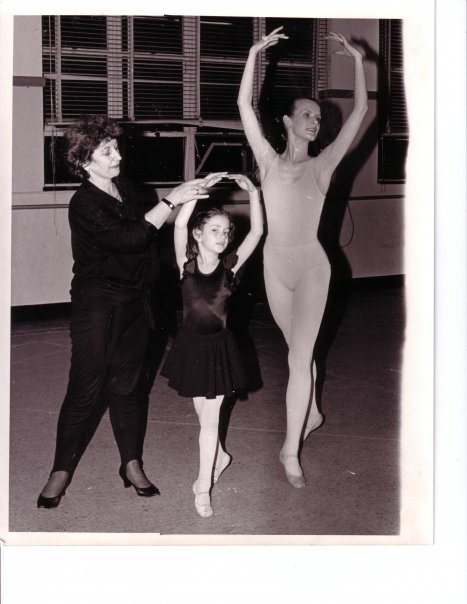
I was 29 years old and was getting ready to start my latest ballet class for 3 and 4 year olds. We were all sitting on the ground in a circle, learning names. A little uncomfortable, I uncrossed my legs and crossed them the other way.
Every single little girl there did the exact same thing.
That’s when it hit me–the power of modeling behavior with kids that age is tremendous. They mimic what you do. I had been trying hard to come up with explanations in bite-sized words that I thought the children would understand.
Turns out all I had to do–was do it.
Now this isn’t to say that you should not teach verbally. You should. But never underestimate the power of what you are doing. This includes simple things such as standing up straight and walking lightly.
Remember…those little eyes are taking it all in…
Teaching Tips: Kids In The Dance Classroom
Today we have a special feature–a guest, who is going to share some tips on teaching children dance. Stacey Pepper Schwartz has been featured in 4dancers series 10 Questions With…, and she is quite the breath of fresh air. I have noticed that most people who work with children in dance have seemingly boundless energy and enthusiasm, and Stacey is no exception. I asked her 5 questions about teaching, and she had some wonderful things to share…
1. When it comes to teaching children, what can you do to help instill a love of dance?
If you instill in a child that she is in charge or her body, that she can make choices with how she wants to move, and how she wants to express herself, you are in essence fostering a life that will be open to the dance within herself and herself within the dance.
We are not just beings with muscles and bones. We can choose how we want to move our muscles, which then moves our bones. When children start to master this concept of choice, they gain self-esteem and a sense of self.
You can also instill a love of dance by having children dance with each other and for each other. Many children who have difficulty with speech can be on the same playing field when it comes to communicating through dance. Even children with coordination or spatial issues can move freely with a group because there is no right or wrong way of expressing yourself. The beauty of dance is that you can communicate with one simple gesture or your entire body. You can dance with another person, a group or be free to take the space by yourself. Both the mover and the audience share the experience. They share common ground.
When we have a joyful or meaningful experience we tend to want to do it again. When you teach remember the joy, remember the importance of body ownership, expression and in sharing the experience with others.
2. What are a few tips for keeping order in a class full of young children?
My tip is to have a bag of tricks. Not one thing will work all the time and different children need different ways of being guided.
- Be consistent, be kind and be deliberate. Don’t ask “Can everyone come to the center of the room?” If you ask a question, be prepared for various answers, like “no!” Instead give the children a task to complete. “Everyone come to the center of the room in low level” or “choose a traveling step to the center of the room and end in a pointy shape.”
- When they complete an activity acknowledge a job well done and be specific. “I like the way everyone found different ways of moving in low level. I saw children moving on their knees, tummies and backs.” Make sure not to use praise words without backing it up or the words become meaningless. When I was student teaching I used to say “great” all the time. The teacher I was working with pointed it out to me. She told me that the word lost its value because I said it so much and I wasn’t being specific about what was so great. I great lesson to learn!
- When a child is having difficulty listening I will ask them to be my partner. This way I can talk quietly to the child and give them cues without having to attract attention to the child and the behavior.
- Have children earn activities. Give them a goal to work towards, like a round of “free- dance” or stickers. Make sure the goal is obtainable or the children can feel defeated. Feeling proud of a job well done is wonderful motivation to do their best!
3. How do you deal with behavior outbursts in a dance class setting?
I was the director of an arts camp and I went in to observe the dance class. I asked a child to move to a different spot in the room and she started screaming at me. I had her sit and watch class while I called her mother. Her mother told me she was dealing with anger management issues. This was a great lesson for me.
Make sure you are partners with the parents or teachers. Having information about any special circumstances will keep you and the children safe and will enable you to have a productive teaching environment.
After talking with the mother, I learned techniques to be helpful to this child and we did not have any other problems. Information will not always be available to you but I feel the more you are aware of specific issues or needs the better equipped you can be.
When I worked in a studio, after class, I made sure to tell each parent one thing their child was working on, something they did well or achieved. I found this very helpful in not only having a successful class for the child but I gained the support of the parents as well.
When I teach in schools, I always try to share my lesson with the teacher and ask if there are any ideas or concepts he or she would like me to work on. I try to model the classroom management style of the teacher to be consistent. I want to partner with the teacher, not only for educational purposes, but for disciplinary purposes as well.
Lastly, if I child is having a difficult time listening, following directions or is being disruptive, I will ask him or her to sit and join the class when ready. I have found this works very well because the child is not getting attention for the negative behavior. Most of the time, the child will join back in after a few minutes. Remember after you discipline a child to follow up with positive reinforcement to engage the child and give him or her attention for good behavior.
4. What was the best piece of teaching advice you ever heard?
By far the best advice I have ever received was accentuate the positive. When I was student teaching, I broke the class into smaller groups to work on a movement activity. I was focusing on a group that was not listening and reprimanding them. The teacher I was working with pointed out to me that the children who were doing a good job were not getting any attention. She taught me that when I praised a group, it influenced the group that was not listening because they wanted attention as well. My class went smoother after this and I was actually accomplishing two things. I was providing positive feedback and was managing the behavior of the class!
Barbara Bashaw, a wonderful teacher I had when I attended Teachers College, Columbia University for my Maters in Dance Education, taught me to always be prepared to improvise. You might have a wonderful lesson prepared but the children might have had a fire drill before your class or if you are teaching in a studio maybe they had off from school that day. You can plan for the class but not for the energy the children will be bringing. You have to ultimately take your cues from the children. This was a hard lesson to learn for me, but an absolutely valuable one!
5. What is the one thing you would tell someone who is new to teaching children dance?
I would tell them they are the student as well. Make sure you are patient with yourself as well as your students. Give yourself permission to experiment, try new things and don’t be afraid to fail. I find I have to do a lesson a few times before I am happy with it. Don’t be afraid to repeat an idea or concept. Kids learn by repetition and so will you. Remember that everyday is a new day for you and the kids. Make sure you smile, laugh and know that you are giving a precious gift. You are teaching more than movement, you are teaching an avenue to experience life.
Bio: Stacey is the Founder and Director of Leaping Legs Creative Movement Programs. The focus of Leaping Legs Creative Movement Programs is to help people regardless of age, experience or ability, become educated about their movement potential, develop kinesthetic awareness, and become more physically fit and healthy together as a family, and community.
Leaping Legs promotes its goal through the original Up Down & All Around DVD. Utilizing the elements of movement, the video entertains as it motivates kids and their families to exercise together using movement games, silly exercises and challenges. The DVD received Dr. Toy’s 100 Best Children’s Products 2009 Award and 10 Best Active Products 2009 Award. The DVD has also been featured in many magazines. In its August 2009 issue, Dance Teacher called the DVD “an essential tool for teaching the fundamentals of movement.”
Stacey received her BFA in dance performance at Montclair State University and her MA in dance education from Teachers College, Columbia University. She has taught as an artist in residency and guest artist in public and private schools for over twelve years.
Dance Teaching Tip: Left-Handed Students
Let’s get this out of the way…
I’m a lefty. And yes, that is why I am doing this post.
As a left-handed dancer I know that there are a few special challenges that teachers should be aware of. For one thing, learning turns may go better on the left side. This is actually a safety issue when you are working on teaching pirouettes for the first time.
I always ask my students if there are any lefties in the room, just so I am aware of the fact that they may have more difficulty picking up combinations that are demonstrated and done first on the right side.
Not all dancers follow handedness in the dance classroom, however. For example–even though I am left-handed, my turns are better on the right. Each student will need to be assessed individually to discover their strengths and challenges. Still, if you are aware of them, you will be more effective as an instructor.
If you have not yet asked your students about this…consider incorporating it into your class. For some students it can really make a world of difference.
4Teaching Tip: For The Older Teacher
I am a teacher who is over 40, and I have noticed a few things that I would like to pass along to teachers who are no longer dancing full-time. Please feel free to share your own if any come to mind that aren’t on this list:
+ Be sure to warm up your feet and ankles prior to teaching a class. Taking a few minutes to stretch out your Achilles tendon and calf muscles can make a world of difference. I’ve noticed that my ligaments and tendons need a little blood flow to work properly now. Demi plies and slow ankle circles make a good warm-up.
+ Choose shoes carefully. I found that once I stopped dancing full-time it was less comfortable to wear regular technique slippers. I now use “dance sneakers,” but have seen teachers wear everything from character shoes to jazz shoes for teaching class. The important things are comfort and the ability to show the steps clearly to students.
+ Utilize students for demonstration. I’m no longer up to doing a grand jete–much less doing one without having done a barre first. When you can, use a student to demonstrate steps that can possibly cause you injury. It makes the student feel good and saves your body the impact.
+ Schedule yourself sensibly. You may want to spread classes out over a few days rather than doing four of them back-to-back. Your body will tell you what it can and cannot handle, so be sure to pay attention to the signs of overdoing it. If you feel stiff, bruised or exceptionally tired, you may be taking on too much at once.
It can be very difficult to adjust your teaching style to adapt to changes in your body as you get older. As dancers we don’t like limitations–we have been taught to push our bodies as hard as we can. Even so, making some minor adjustments can mean that you are able to teach more effectively as well as feel better physically, so it really is worth it in the long run.
Any tips to share?
210 Questions With…Stacey Pepper Schwartz
This is the first in our series, “10 Questions With…” which we will be doing throughout 2010….hope you enjoy taking a closer look at Stacey Pepper Schwartz…
Please tell me your name, your position and a little bit about your
background.
Hi. My name is Stacey Pepper Schwartz and I am the Founder and Director of Leaping Legs Creative Movement Programs. The focus of Leaping Legs is to help people regardless of age, experience or ability, become educated about their movement potential, develop kinesthetic awareness, and become more physically fit and healthy together as a family, and community. Leaping Legs promotes its goal through its original Up Down & All Around DVD, teacher training, and school and community workshops.
I started my dance journey studying to be a modern dancer and choreographer. I graduated from Montclair State University with a BFA in dance performance and six months later I was the choreographer’s intern on the Broadway show Titanic. After Titanic, I assisted Lynne Taylor-Corbett on several other projects. One of the highlights was being the assistant choreographer for the Broadway show Jackie: An American Dream. I was also the Dance Captain for the Broadway Workshop Swing! Unfortunately, after the workshop I had to have back surgery. I went back to school and I received my Masters in Art at Teachers College, Columbia University in dance education.
After earning my masters, I choreographed Jacques Brel is Alive and Well and Living in Paris and The Song of Singapore at Capital Repertory Theatre, NY. I also worked in the Education Department of Capital Repertory Theatre as the Program Coordinator for various multi-disciplined arts programs for kids ranging in age from 7-13. I was a teaching artist as part of Capital Repertory Theatre’s Community Partnership, facilitating the integration of the arts into the curriculum as well as addressing the NY State Standards.
1. How did you get the idea for this DVD?
That is a great question. When my daughter was four years old I developed a creative movement program for her preschool. I loved teaching the kids at the school but what I discovered was I loved just as much teaching the teachers how they could incorporate more movement into the children’s school day. I felt that there was a stigma regarding dance. The teachers did not understand the elements of movement or even how to begin making the connections between movement and their curriculum. And further more, the teachers were not comfortable moving and felt they could only move with the kids if they were “good” dancers.
At this time, many of the parents were asking me where else I taught. I looked into teaching at a few of the studios near where I lived but was disappointed that the schools were so heavily focused on performing instead of dancing. I felt that teaching steps without the understanding and delving into the elements of movement was leaving so much out. It’s like teaching a musician to play an instrument by only teaching the notes.
So, I decided that I was going to give teachers and parents the permission, understanding and tools to bring more movement into their lives and their children’s lives. (It also didn’t hurt that one of my dearest friends is a professional videographer that was eager to help!)
2. What motivated you to do all this work?
What motivated me was that I saw a real need for kids and adults to move more and to interact more. I deliberately created the exercises to be interactive and for the program to be accessible for all kids and all movers. When I worked at the preschool, I saw children ages 2-6, with various levels of movement experience and ability. Everyone has the potential to move. You just need a body and willing spirit. I think so many people think of dance and movement as this outward experience (what we are presenting) instead of the inward experience (what we are feeling, understanding, incorporating and processing.) It is so important to me for every child to have a movement experience, no matter the ability, or experience.
When I teach, some kids are shy at first and don’t want to participate. I point out to a child that is shrugging her shoulders that she is already moving! I guess the simplest answer to the question of what motivated me is ownership. Everybody has the right to experience ownership of their bodies. And I was passionate about making a tool to help children and adults achieve this together.
3. How did your background help you to create the DVD?
My background, without my knowledge, really sparked the DVD. After my back surgery I never thought I would dance again. I saw what I was able to do before the injury as an impossibility after, so in my mind I couldn’t dance. Maybe my passion for sharing with other’s all the movement possibilities that are out there came from my own rediscovery. I am a firm believer of teaching the elements of movement: space, time, energy and body. Understanding the tools, unlocks the toolbox.
My professional dance training and performing background of course helped. I had never worked in front of a camera before but I love performing for an audience. So, the camera was my audience, and I loved every minute of it!
Finally, my degree in dance education was priceless. It was like I had all the pieces of the puzzle and I just needed the right medium to put it all together. My friend provided me with the medium.
4. What makes this DVD unique?
I think a few things makes this DVD unique. First, I am the only dancer in the video. I wanted it to be accessible to everyone and wanted kids and adults doing the video to see other regular kids and adults doing it with them. Second, award winning children’s musician Steve Blunt performs all his original music on the DVD, which adds another element of fun, entertainment and user-friendly component. His music is fun for adults as well as kids which was very important to me, because if parents don’t like to listen to something they will not put it on for their kids. And finally, since the DVD was designed specifically to be utilized by educators and parents, a comprehensive movement guide is available to use in conjunction with the DVD. The guide explains how to do each section of the program in depth, what kinesthetic skills are being addressed as well as offers fun variations to the exercises. This is a comprehensive program that will help schools and communities meet the National Physical Education Standards as well as the 5210 program implemented in many schools.
5. How long did the process take from start to finish?
My first unofficial meeting was with my friend, Deb Mendonca Cote, and our kids at a Friendly’s Restaurant in February 2008. I looked at her and asked her if she seriously thought we could pull it together. She said absolutely and took another bite of her french fry. We shot the DVD on April 20, 2008, finished editing at the end of September, sent the DVDs to distribution in October, had my website up in December and sold the first DVD before the New Year. (This is how I work, once I have an idea I go all out.)
6. What advice would you have for anyone who is thinking about doing a DVD for teaching dance?
Do it if you are passionate about it. Do what ever you are passionate about, and listen to yourself. Really listen to what you want to do, not what you are supposed to do or what you can’t do, but what you can. Then do it.
7. What was your favorite part about the process of making the DVD?
Finding out about myself, finding out how much I enjoyed learning about what I didn’t know. Finding out that dance at 34 was more fun and rewarding because I was following my heart. Finding out collaborating with others who share the same vision is so rewarding and finding out that I wasn’t afraid to ask; that 9 times out of 10 people say yes.
8. What was the most difficult part of the process?
Hands down, the hardest part was the day of the shoot. Because of scheduling conflicts we only had one day to shoot the entire DVD. We had four kids to keep occupied and engaged. And my daughter was in the DVD. That was the hardest because she did not want to listen to me. I never will shoot a video in one day ever again.
9. Do you have anything else in the works?
Right now I am really focused on marketing and getting the DVD out there to parents, dance teachers, school teachers, community programs, etc. I am new to marketing and am learning something new everyday. I also started my own dance blog called Letters From Leaping Legs , which I want to be an extension of my website. I want to continue to be a resource for parents and teachers to gain insight, ideas and movement activities that they can do with the kids in their lives. I want to keep everyone moving up down and all around.
10. What is the best feedback you have gotten about the DVD to date?
I have gotten some great reviews. The Up Down & All Around DVD received Dr. Toy’s 100 Best Children’s Products 2009 Award and 10 Best Active Products 2009 Award. The DVD has also been featured in many magazines including Dance Teacher and Dance Retailer News. In its August 2009 issue, Dance Teacher called the DVD “an essential tool for teaching the fundamentals of movement with daily adult-child interactions.” The review I got from 4dancers blew me away. It was like you were sitting with me during the early pre-production meetings. One of my many favorite quotes from the review is “the program does as much to teach adults about how children learn and what they are capable of as it teaches the kids how to move.”
The best feedback has been from the parents and teachers using the DVD. I was at a fair selling my DVD and I heard from across the room a mom yell to her two kids, “Look it’s Leaping Legs!” She ran up to me and told me how much her kids love the DVD. She has a son who is on the autistic spectrum and a daughter. They all do the DVD together. I don’t think the smile left my face for the rest of the day.
6Teaching Tip: The Two-Minute Rule
If you are just beginning to teach young children, you may want to keep in mind what I like to call the “two-minute rule”. Little ones tend to bore easily, so besides presenting an energetic demeanor, you can also make sure they pay attention by limiting each exercise to about two minutes or so (give or take).
This means some advance planning. If you have a 40 minute class and teach in two-minute segments, that means a lot of different activities! Still, you can use the same ones over again each week–just make sure that you add a new one from time to time to change things up a little bit.
If you are stuck for new ideas, take a peek at this piece I wrote some time ago for Dance Teacher on how to use games to teach a dance class for young students. It should give you some tools you can use.
Anyone else have any tips? Feel free to share them here–it’s nice when we can all help each other out!
0Welcome To 4Dancers!
I’d like to welcome you to 4Dancers. This blog is about everything dance–teaching, performing, history–even clothing! Come back and see us soon–we have lots of things in store for our readers…
0