The Curse Of Being Creative (Why WorkFlowy is Amazing)
by Lauren Warnecke
- I consider myself to be an organized person. I mean, I guess I know I’m an organized person because I usually end up where I need to end up on time. I usually pay my bills on time. People hire me to organize performance projects, and, as far as I can tell, they all turn out ok. I’m organized, but I’m also a dancemaker. Like most other working artists I can’t survive unless I have multiple jobs. Last fall I think my brain got to capacity. I had taken on more than any organized person – or rather any person – should, and it got to the point that some things were starting to slip… like remembering to brush my teeth and pay the cable bill.
- Things float in and out of my brain. It’s the curse of being a creative person. We’re not linear thinkers. I am often simultaneously thinking about the role of the American housewife, the importance of the right index finger, the best way to engage new audience members, if I have any clean pants, and what to have for dinner. One thought leads to the next in a stream of consciousness that, heard by another person, doesn’t make a whole lot of sense. This is an awesome problem to have, but can also be frustrating when you are 1) trying to communicate with people who AREN’T non-linear thinkers (and yes, I realize I just used a double negative there), or 2) trying to communicate with someone who is also creative, but not your kind of creative. That’s pretty much everyone.
- But it all makes sense to me. I just don’t have room for it in my brain. Enter 2012. Even before the confetti was falling on a new year, I had resolved that I needed a new way to organize my thoughts. I love paper planners, and though I completely embrace technology I’ve never found a techie tool for storing a to-do list effectively. You either have to categorize things, rank things, or otherwise pigeon hole your thoughts into a few characters. By some sort of divine intervention (that is, the “freshly pressed” feed on WordPress.com), I came across a post about a newfangled organizational tool: WorkFlowy.
- I’m in love with workflowy. It is new(ish? I think?), but its brilliance is in its stark simplicity. WorkFlowy is a big, fat, unlimited capacity, bullet-pointed typepad, that you don’t have to save, can open up wherever you have the interwebs, and share with whomever you please. No categories. No muss, no fuss. No pigeon holes. Today on my WorkFlowy, I brainstormed marketing ideas for an event I’m managing, added bananas to my shopping list, and wrote this article.
- Apart from shameless promotion for a new thing I found that I love, the point is this: in order to keep ourselves surviving and making work we have to keep seven jobs. In order to keep seven jobs, we’ve got to be organized. In order to be organized, you don’t necessarily need WorkFlowy, but you need some sort of interface that works the way YOUR brain works. That could be a paper planner, an iPad or a sheet of loose leaf paper. For me, I think it might be this. Until, of course, the internet goes away… but I’ll cross that bridge if I come to it.
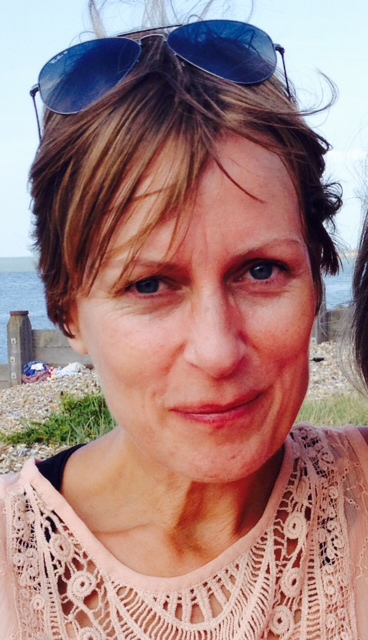
Contributor Lauren Warnecke is a Chicago-based dance artist, educator and writer. She trained at Judith Svalander School of Ballet and Barat Conservatory of Dance before earning a BA in Dance at Columbia College Chicago. In 2009, Lauren completed her MS in Kinesiology at the University of Illinois at Chicago. She is an adjunct instructor for the Department of Kinesiology at UIC, the Performing Arts Coordinator at the Menomonee Club for Boys and Girls, a member of the Cecchetti Council of America, and Neurotransmitter to Synapse Arts Collective (read: too many jobs).
Lauren created and maintains Art Intercepts as a platform for dance that is informed, inventive, and evidence-based. In addition to writing at 4dancers, Lauren is a columnist at Dance Advantage, specializing in dance injuries and prevention, dancer wellness, and evidence-based teaching practices. She also enjoys her freelance work as a grant writer and production manager and likes to grow strawberries, bake scones, and dig in the dirt.
The Freed Pointe Shoe
Today I’m pleased to announce that we will be doing a series of posts about Freed pointe shoes in the coming weeks on 4dancers. Brenda Neville is a professional fitter and works in retail management at Freed’s boutique store in New York, and she was kind enough to walk us through some of the history, as well as talk a bit about fitting pointe shoes properly and other pointe-related topics.
I admit to having a certain “soft spot” for Freeds. Although I started with Capezio Pavlova’s back in the day, I always was fascinated by the unusual color of Freed pointe shoes. As soon as I was able, I switched over—and never looked back. Freeds were the shoes I wore for the rest of my time as a ballet dancer. And I loved them.
I can still recall going to have them fitted with my Mom in some old building downtown. We would get into the caged metal elevator and ride up to the level that the store was located on. It always seemed that there were no other people in the building when we were there. Instead of that being a spooky experience, it was almost magical. I always enjoyed going to get new shoes…
The Break-In Saga In Three Chapters – Emily Kate Long
Throughout the month we’ll be hearing a variety of things about pointe shoes–from what they do to the feet, to how they are made. Today we have Emily Kate Long with us to talk about how she breaks in her pointe shoes…
I wear Freed Classic Pro, “Anchor” maker. Since I’m unable to get special order shoes, I do a lot to mine to make them just right.
First things first: ribbons and crisscross elastic go on. I sew the heel ends of the elastics slightly towards the outside of the heel seam so the shoe won’t twist in and sickle. Then the back nail comes out, I bend the shanks and step on each shoe, and they are ready to break in with some releves.
Once the box is a little more pliable, I take a cotton drawstring (stockpiled from when I wore Chacott or borrowed from other dancers; Classic Pro have elastic drawstrings) and twist it into a little rope to sew around the platform of each shoe. I use the wear pattern on the satin to inform the placement of the darning–usually I make it so the stitching pushes me a little farther over the shoe and a little to the inside.
Darning also helps correct any lumps or imperfections on the pleats or platform and quiets the shoes down. I also sew the sides of the shoes down so my foot doesn’t look like it has a turtleneck sweater on. I think pointe shoes should look like a beautiful evening gown, complete with plunging neckline!
Step three: noise control! Loud shoes are my worst nightmare, so I mush up the box more and do lots of changements before I glue them. Then a light coating of glue on the inside, mainly on the pleats and along the shank. Once the glue cures they are ready to go. I usually keep three or four pairs ready: harder for class and classical rehearsals, softer for contemporary work, and one really dead comfy pair for rehearsals that involve a lot of standing around.
About the dancer:
Emily Kate Long began her dance education in South Bend, Indiana, with Kimmary Williams and Jacob Rice and graduated in 2007 from Pittsburgh Ballet Theatre School’s Schenley Program. Ms Long attended Milwaukee Ballet School’s Summer Intensive on scholarship before being invited to join Milwaukee Ballet II in 2007. She also has spent summers studying at Saratoga Summer Dance Intensive, Miami City Ballet, Pittsburgh Ballet Theatre School, Pittsburgh Youth Ballet, and Ballet Chicago.
Ms Long has been a member of Ballet Quad Cities since 2009. She has danced featured roles in Deanna Carter’s Ash to Glass and Dracula, participated in the company’s 2010 tour to New York City, and most recently performed the title role in Courtney Lyon’s Cinderella and the role of Clara in The Nutcracker. Prior to joining Ballet Quad Cities Ms Long performed with Milwaukee Ballet and MBII in Michael Pink’s The Nutcracker and Candide Overture, Petipa’s The Sleeping Beauty and La Bayadére, Balanchine’s Who Cares?, Bournonville’s Flower Festival in Genzano and Napoli, and original contemporary and neoclassical works by Tom Teague, Denis Malinkine, Rolando Yanes, and Petr Zaharadnicek. She also collaborated extensively with the Milwaukee Ballet Education Department on the children’s ballet Maria and the Magic Doll Shoppe, which toured to over 20 venues throughout southeastern Wisconsin.
Shop Indie Bookstores
Sound Design: Finding a Workflow That Works
by John Nevin
A common mistake made by choreographers is to think of their final sound design as one of the last steps in their process. Although the initial inspiration for choreography is often musical, the fine-tuning of the musical score is usually relegated to the final stages of the work, along with the costumes and lighting design.
In all three areas, there is expertise that a choreographer may need some help with, but sound design is so integral to the creative process of choreography that it needs to be included early and often. Doing so isn’t that difficult or that expensive, and in many cases it can be easy and free.
Naturally, if you’re choreographing a short work to a single track, or creating a piece that is essentially non-musical, there’s very little involved in the sound design. In every other case, a continuous awareness of how you’re developing your score can really enhance the development of the choreography. The question becomes how to do this, because for most dancers, the sound design process can be a little intimidating. Very often, the best way to begin something that’s intimidating is to think about how it should end, so let’s start with the ending.
0About Pointe Shoe Wool…
Today we’re running a post on something I was particularly excited about sharing with the dance community…wool for pointe shoes. When I was researching different topics for possible inclusion this month, I came across Pine Acres Woolstock, which is located in northwestern Wisconsin.
Pine Acres has a small flock of Romney/Rambouillet sheep, and the owner, Teresa Smit, processes some of their wool for use in pointe shoes. I reached out to her to learn more, and she was kind enough to tell us a bit about how wool is processed and prepared for use in pointe shoes…
- Can you tell readers a little bit about how you got involved with producing pointe shoe wool?
I am really combining two loves from childhood. I grew up on a farm and am a country girl at heart. During my childhood I enjoyed 11 years of dance, including pointe, and understand the value of wool for padding the toes. Raising a flock of sheep now keeps me happily connected to both worlds.
- What is the process like of processing the wool for ballet dancers?
Softness and cleanliness are my two criteria for pointe wool. Softness in wool is determined by the breed of sheep. The Rambouillet breed produces soft, fine wool and is the basis for my pointe wool. The sheep are shorn once a year, usually in April. After shearing, a cover is placed on each sheep which is worn throughout the year. It is replaced with a larger one periodically as the wool grows. These coats protect the wool from the elements of weather and keep the fleeces nice and clean. After shearing, the wool is washed and sent to the woolen mill to be processed.
- What are some of the benefits of wool?
Keeping Dancers Dancing: An Introduction to Dance Wellness in 2012
Join me in welcoming Jan Dunn who is going to be with us this year writing about Dance Wellness. Ms. Dunn has an extremely impressive background in the field and I’m really excited that she will be sharing her insights with us here at 4dancers…
by Jan Dunn, MS
Welcome to the world of Dance Wellness! (also sometimes called “Dance Medicine and Science”). Dance Wellness is a fairly recent branch on the dance family tree; thirty-five years ago, the field did not exist at all. But the last three decades have witnessed tremendous growth in our knowledge of how to keep dancers dancing, longer and stronger than ever before. This is the first in a series of on-going articles about dance wellness, integrating recently learned information to help teachers, dancers, choreographers, and directors.
What IS “dance wellness”, or “dance medicine and science”? The “dance medicine” part is comparable to sports medicine – the care and prevention of dance injuries – just as sports medicine serves the same function for its participants. “Dance science” draws on research in the last thirty years (most of it in dance itself, as opposed to sports or other fields) from such areas as:
- kinesiology and anatomy
- biomechanics
- exercise physiology
- motor learning
- nutrition
- psychology
Both areas are concerned primarily with how dance injuries can be prevented / minimized, and how to integrate these findings into dance training. “Dance wellness” incorporates all of these concepts — i.e., keeping dancers healthy, to be able to have long, viable careers with decreased risk of injury.
2January 2012: Pointe Shoes & More
For this first month of the year 4dancers will be taking a closer look at the pointe shoe and all that surrounds it. Tune in for more about things such as:
The process of raising sheep to provide lambs wool for ballet dancers
A closer look at Freed pointe shoes, including the history, how they are constructed and how to fit them properly
Exercises you can do to improve your arch
And much more!
We’ll also be featuring great content from our columnists, including new contributor, Jan Dunn, who will be talking about dancer wellness. Toss in a teaching tip or two and our new “Dance Blog Spotlight” feature and we’re off and running to meet 2012 with more quality content for readers than ever before!
Happy New Year!
0Finis: What Is A Dance Portrait?
by Christopher Duggan
This November I moved into a new office space with a fully equipped photo studio, perfect for solo sessions with dancers looking for new portraits for their portfolios. I recently broke in my new space with Caleb Teicher, an 18-year-old dancer who just won a 2011 Bessie for his performance with Michelle Dorrance’s tap company, Dorrance Dance.
I knew Caleb wanted a new head shot along with some dance images, but I didn’t have any direction beyond that. He arrived at the studio completely open to the creative process, and we started the session with little else but trust in each other. Everything flowed wonderfully, resulting in a steady stream of charismatic images showcasing his signature style.

This isn’t always my approach to a studio session. Sometimes it’s best to come in with clearer goals for specific angles and stylistic ideas. (More on that in another column.)
As dancers, what approach have you taken in studio sessions? What direction (or how much direction) would you like to have from your photographer? And most importantly, what is the dance portrait? What makes the portrait useful to you and why?
Is a “dance portrait” one that features a dance move? Of these images I’m showing, which is the one that personifies “dance portrait” the most?
View more photos of Caleb’s shoot here.
Contributor Christopher Duggan is the founder and principal photographer of Christopher Duggan Photography, a New York City-based wedding and dance photography studio. Duggan has been the Festival Photographer for Jacob’s Pillow Dance since 2006. In this capacity, and as a respected New York-based dance photographer, he has worked with renowned choreographers and performers of international acclaim as well as upstarts in the city’s diverse performance scene.
He has created studio shots of Gallim Dance, Skybetter + Associates and Zvidance, among others, and in 2011 alone, he has photographed WestFest at Cunningham Studios, Dance From the Heart for Dancers Responding to Aids, The Gotham Dance Festival at The Joyce Theater, and assisted Nel Shelby Productions in filming Vail International Dance Festival.
Duggan often teams up with his talented wife and Pillow videographer Nel Shelby (http://nelshelby.com). A New York City-based husband and wife dance documentation team, they are equipped to document performances, create and edit marketing videos and choreography reels, and much more.
Christopher Duggan Photography also covers Manhattan’s finest wedding venues, the Metropolitan and Tri-State areas, and frequently travels to destination weddings. The company’s mission is straightforward and heartfelt – create timeless, memorable images of brides, grooms, their families and friends, and capture special moments of shared love, laughter and joy.
His photographs appear in The New York Times, Destination I Do, Photo District News, Boston Globe, Financial Times, Dance Magazine, Munaluchi Bridal, and Bride & Bloom, among other esteemed publications and popular wedding blogs. One of his images of Bruce Springsteen was added to the Rock & Roll Hall of Fame’s celebrated photography collection in 2010. His company has been selected for inclusion in “The Listings” in New York Weddings magazine.
1Setting Dance Goals For 2012
Every year I set a few professional goals for myself. I’ve reached almost all of them. I think the key is to spend a little time thinking about what you really want to do before creating any resolutions. That way you are clear on what it is that you want.
I spent a lot of time thinking about how I want this blog to evolve in the coming year. Up until this point I have just let it grow slowly, without spending a lot of time on the “plan” for where it is going next. But, with 4dancers turning 2, I thought it might be time to define a few long-term goals for 2012. One of them was to develop an editorial calendar, which I am still in the process of finishing, and the other was to begin the process of focusing the content so that it is a solid resource for dancers and dance professionals. That goal will evolve over time.
Setting a couple dance goals for yourself can be very helpful. Just the act of writing out what it is that you want to do helps solidify it in your mind. You don’t have to do anything fancy…just jot them down.
Of course, after you set the goal you’ll want to create a plan for achieving it. Try to be as specific as you can in terms of the steps you need to take to get there. Map out ways to measure your progress along the way so you don’t get discouraged. And be ready to adjust the plan on the fly if need by. After all, life has a way of shifting things…
Do you have any dance goals for 2012? I’d love to hear them!
2Merry Christmas & Happy Holidays
We’d like to take a moment to say thank you to all of our readers in 2011 and wish you a safe, happy and healthy holiday season. There are many new things to come on the blog in 2012, including:
- A dance wellness column, written by 4dancers new contributor, Jan Dunn
- January will focus on the pointe shoe–giving you inside information, tips, tricks and foot care info
- February will be our health/wellness/injury month, with content from physicians who have treated dancers, a nutritionist and more
- Fresh content from our wonderful contributing writer staff!
We look forward to serving you in 2012! Happy holidays!
2